Insights
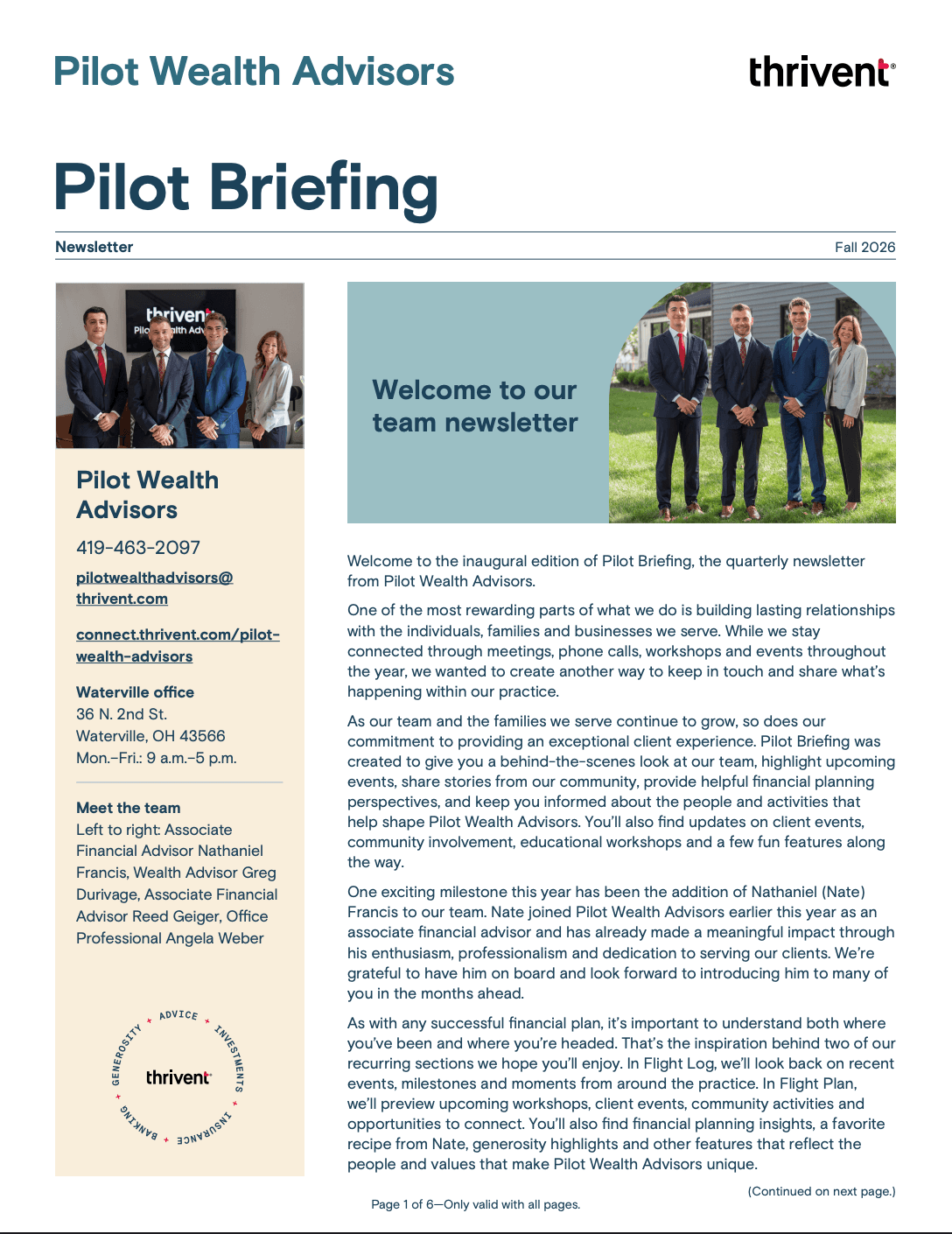
Welcome aboard! ✈️ We're proud to launch the inaugural edition of Pilot Briefing, our new quarterly newsletter designed to keep you informed and connected with everything happening at Pilot Wealth Advisors. From client events and financial planning perspectives to team updates, community impact, and upcoming opportunities, this newsletter gives you a behind-the-scenes look at our practice and the people who make it possible. Thank you for your continued trust and support. We can't wait to share this journey with you.See Thrivent.com/social for disclosures.

Celebrating 250 Years of American Independence As we celebrate America's 250th birthday, it's a great time to reflect on the freedoms and opportunities we often take for granted. We're incredibly fortunate to live in a country where we have the freedom to build businesses, raise our families, pursue our dreams, and give back to our communities. Those freedoms exist because of the countless men and women who have served and sacrificed to protect them, and today we're grateful for each of them. We're also grateful for the opportunity to serve the individuals and families who place their trust in Pilot Wealth Advisors. Thank you for allowing us to be part of your financial journey. From all of us at Pilot Wealth Advisors, we wish you and your family a safe, joyful, and meaningful Independence Day. Happy Fourth of July! See thrivent.com/social for disclosures.
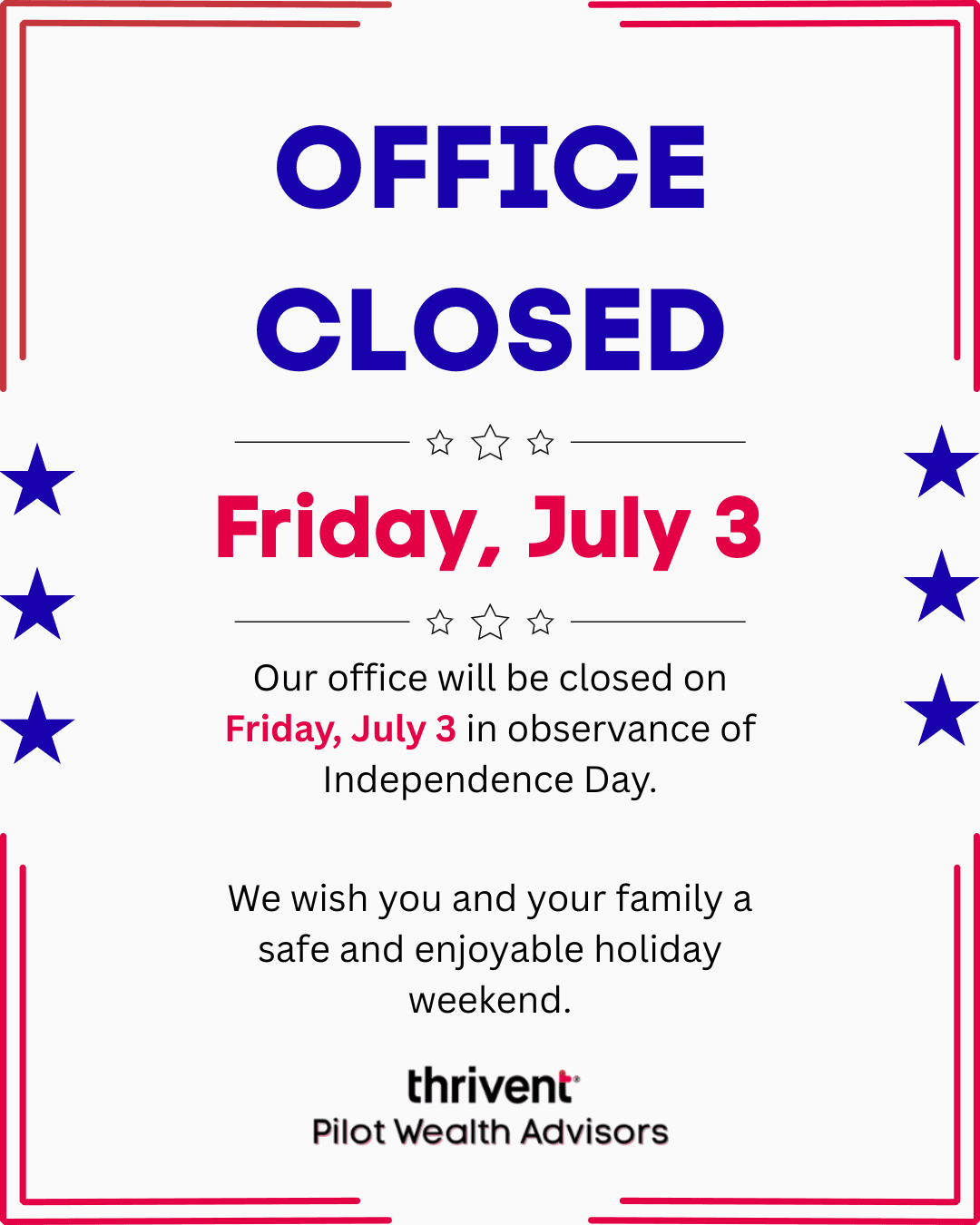
📢Office Closure Notice:In observance of Independence Day, our office will be closed on Friday, July 3.We wish you and your family a safe, happy, and enjoyable holiday weekend!See Thrivent.com/social for disclosures

Had a really good group out last night talking through the 5 Phases of an IRA. A lot of the tax conversations we have with clients start to come together when you take a step back and look at the bigger picture over your lifetime. Tax planning isn’t reacting each year after you file your return. It’s about being intentional over time with how and when income shows up, and where opportunities might exist to reduce your lifetime tax bill. Appreciate everyone who made time to come out!See thrivent.com/social for disclosures.

🚴🏼 100 miles is the easy part. Raising $100,000 is the challenge.Next Friday, I'll be riding in the Solstice Century for the third consecutive year, joining fellow riders working toward a collective goal of raising $100,000 for charity.This year, I've chosen to support 16 Days and 4:13, two incredible organizations making a difference in the lives of NICU families and children in emerging nations.I've seen firsthand how generous this community can be, and I'm grateful for everyone who has supported this ride over the past three years.Whether it's $10, $25, or $100, every donation helps move us closer to the goal and creates a real impact for people who need it.Thank you for helping us turn miles into impact.#SolsticeCentury #CyclingForACause #GiveBack #PilotWealthAdvisors #16Days #413See thrivent.com/social for disclosures.
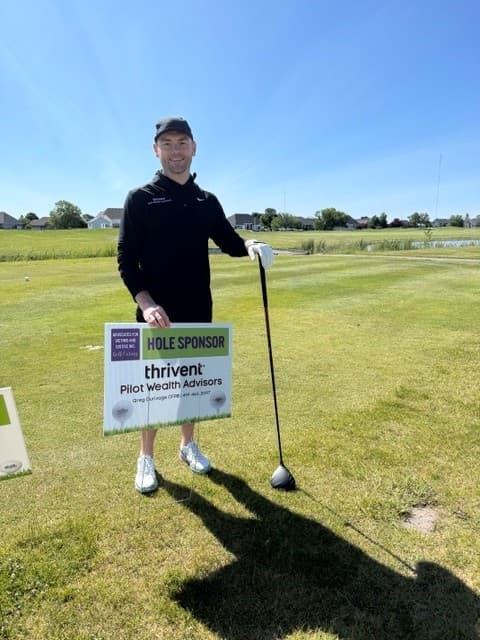
Spent Saturday at Eagle's Landing for the Advocates for Victims and Justice golf outing.This was my fourth year participating and sponsoring the event and it's always a blast to be a part of. We finished at -14, which didn't quite get it done, but we had a great time, and enjoyed supporting an organization that does important work in our community. Already looking forward to next year. #PilotWealthAdvisorsSee thrivent.com/social for disclosures
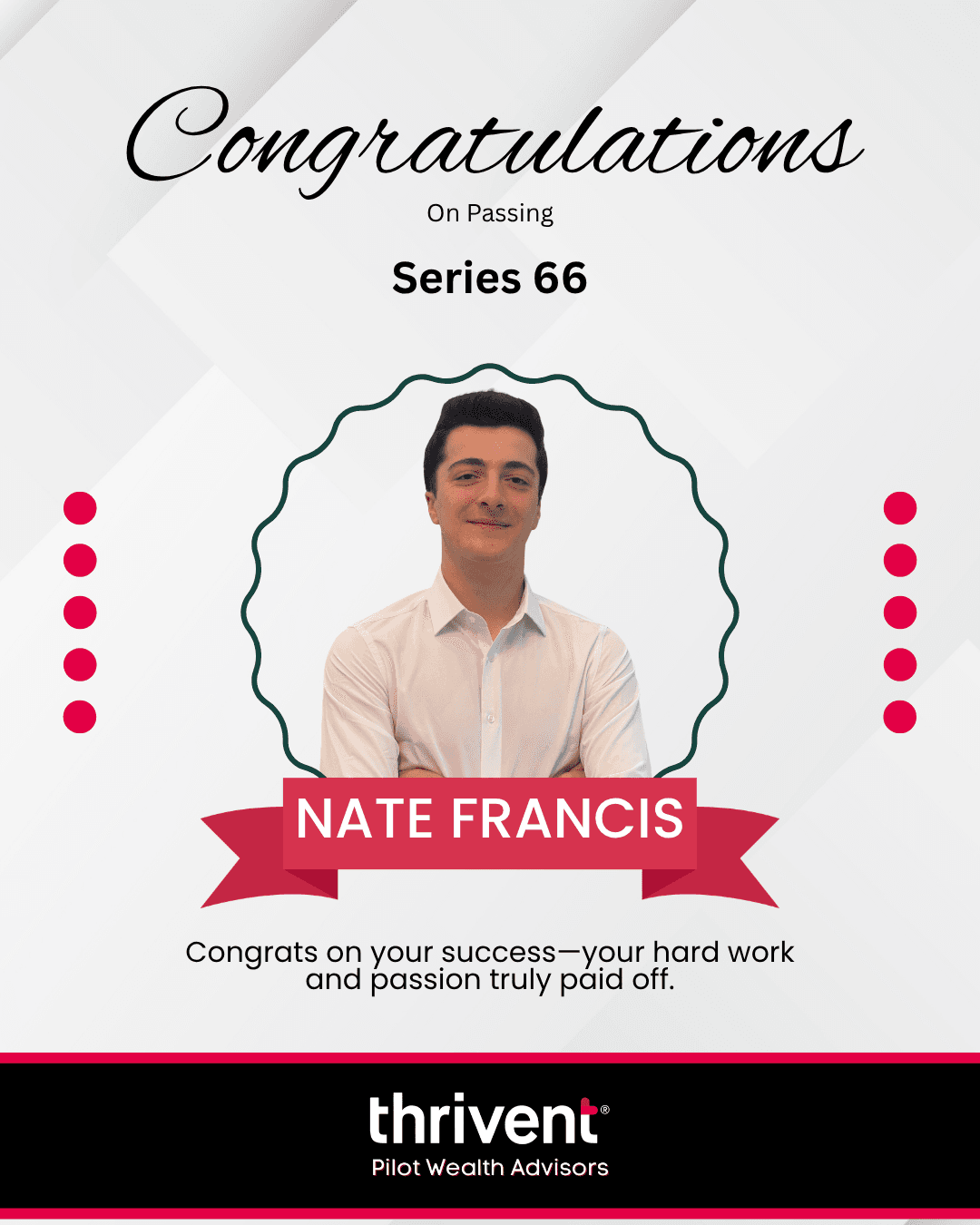
Excited to share that Nate recently passed his Series 66 exam and is now fully licensed as he officially steps into an Associate Advisor role with our team.Over the past year, Nate has spent countless hours studying and preparing for his licensing exams while continuing to be involved behind the scenes with our team and practice. With this milestone now complete, clients will begin seeing Nate more involved in meeting preparation, analyses, client support, and sitting in on meetings as he continues growing into his new role.As Pilot Wealth Advisors continues to grow, we’re excited to continue building a strong team focused on delivering a high level of service and support for our clients, and we’re grateful to have Nate as part of that future.Congrats, Nate! 👏#PilotWealthAdvisorsSee Thrivent.com/social for disclosures
Happy Birthday, Reed! We’re thankful for everything you do and grateful to have you as part of the PWA family. It’s been exciting to watch your growth and the positive impact you’re already making on both our team and our clients.Hope you have a great day celebrating — well deserved!#PilotWealthAdvisors

Happy Memorial Day.Today, we pause to remember and honor the heroes who made the ultimate sacrifice in service to our country. In observance of Memorial Day, our office will be closed Monday, May 25th.May this day be a meaningful time of reflection, gratitude, and remembrance for those who never made it home—and for the families who continue to carry their legacy forward.See thrivent.com/social for disclosures
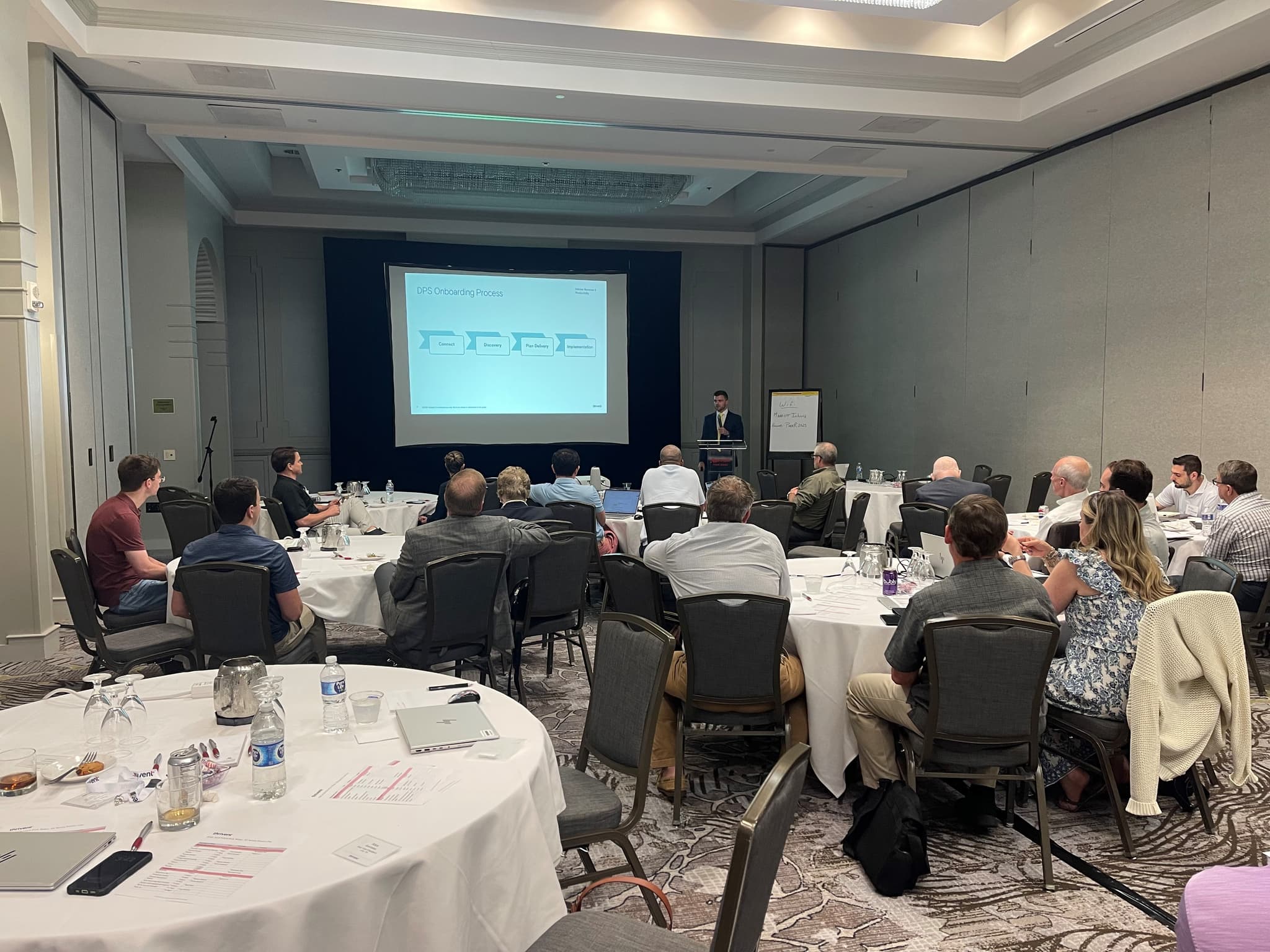
Spent Monday out in Montvale, NJ speaking to another great group of advisors.One of the biggest topics we discussed was the impact that a true fee-based financial planning relationship can have, both for clients and for the long-term health of an advisory practice.At the end of the day, financial planning should be about more than just products or investments. It’s about taking the time to truly understand someone’s goals, values, priorities, concerns, and what financial freedom looks like for them personally. Then building a roadmap designed to help align their finances with the life they want to live.That level of planning takes time. It takes systems, processes, and ongoing conversations. But I believe it also creates deeper relationships, stronger trust, and ultimately allows advisors to serve clients at a higher level.From the business side, I talked a lot about how leading with advice and consistently putting clients first tends to create stronger long-term practices as well. We spent time discussing everything from our client meeting process, to the systems and workflows my team uses behind the scenes, to building the right team and infrastructure to continue growing while still delivering a high level of service.Over time, I believe that approach helps create the type of practice built on relationships, ongoing engagement, and intentional growth, not just transactions.Those conversations are always energizing for me because I genuinely believe this profession can make a meaningful impact when done the right way.See thrivent.com/social for disclosures.
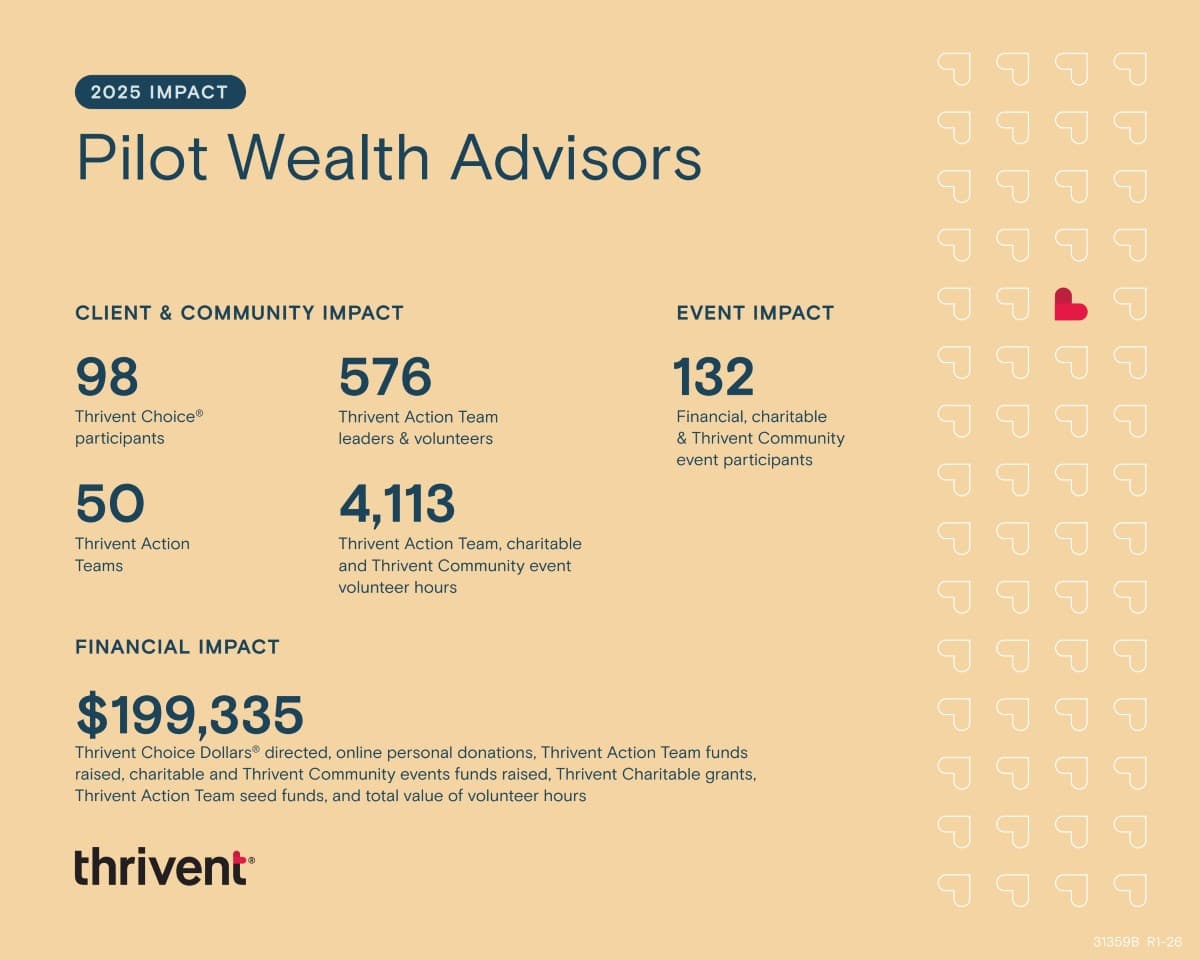
Really cool to see the impact our clients made in 2025 by utilizing Thrivent’s generosity programs.These numbers come from clients directing Choice Dollars, using Action Teams, and giving back through the events we’ve hosted—it adds up fast!This is a big part of why I chose to build my practice at Thrivent. Helping people be generous and make an impact is just as important as anything else we do.**Numbers exclude individual charitable giving and any charitable planning we’ve helped facilitate. See thrivent.com/social for disclosures.

Miss Weber’s 1st grade class at Toledo Christian recently participated in a Thrivent Action Team! While learning about generosity, the students had the chance to give back by packing bags for kids at Mosaic Ministries in Toledo—turning a lesson into real impact.See thrivent.com/social for disclosures

Please join us in congratulating Nate on his recent graduation from Bowling Green State University, where he earned his Bachelor of Science in Business Administration with a specialization in Finance and Applied Economics. Nate achieved an impressive 3.74 cumulative GPA, earning the prestigious distinction of graduating cum laude — a well-deserved accomplishment.Balancing academics while interning and passing his Life & Health, SIE, and Series 7 exams is no small feat, and this achievement speaks to Nate’s dedication, discipline, and commitment to continuous growth.We are proud to have Nate as part of our team and are excited to see all he will accomplish in this next chapter. Now that Nate has graduated, he will be joining the practice full-time.See thrivent.com/social for disclosures
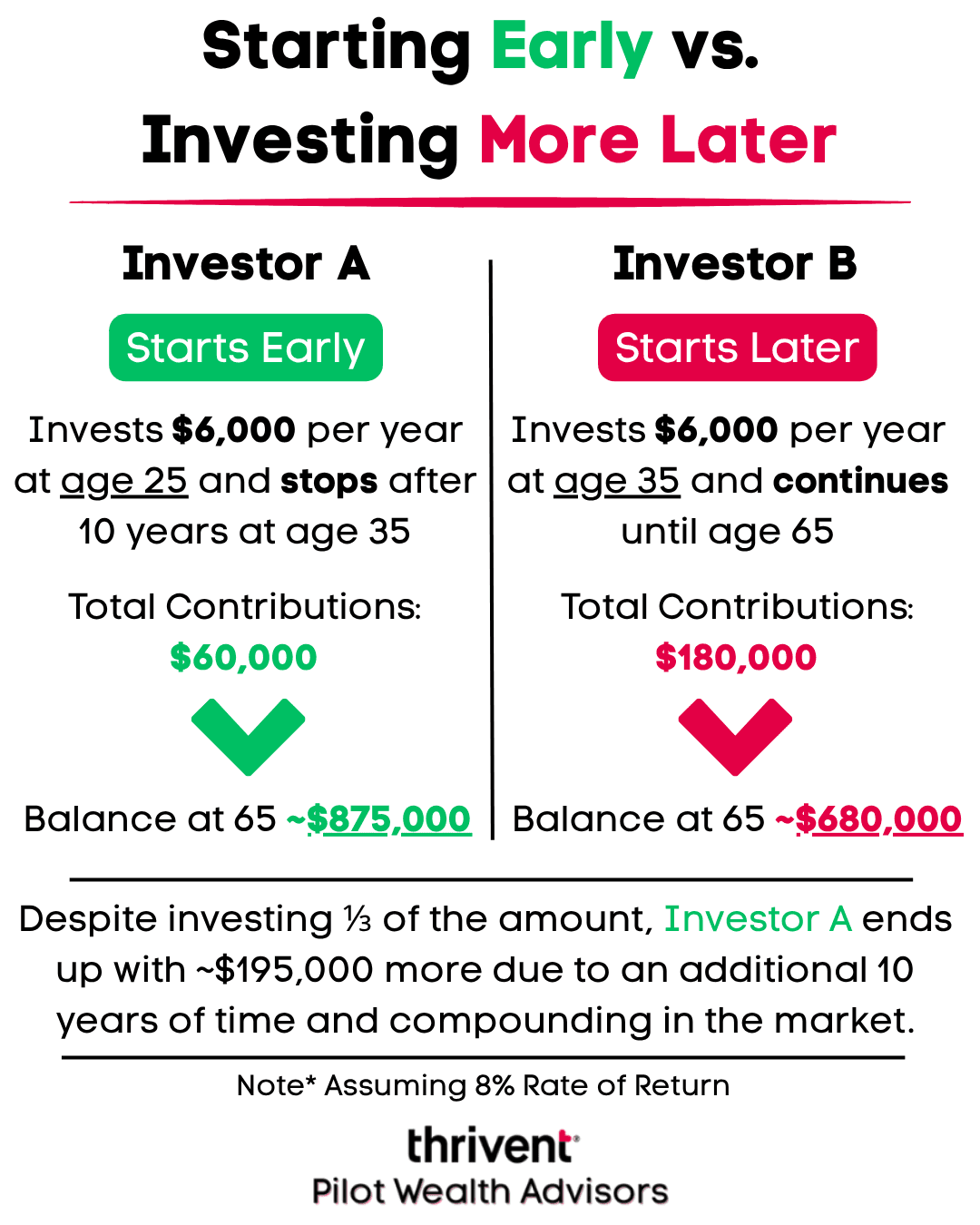
It’s natural to want to invest more later once you feel you have more financial freedom—but this example shows how time can make a meaningful difference in the end result.Investor A stopped contributing after 10 years, yet still ended with more than Investor B, who invested three times as much over a longer period. The difference comes down to one key factor: time in the market.When investments have more time, compounding can build on itself and begin to do more of the work—even if contributions stop earlier. Starting earlier can also reduce how much you may need to contribute over time, as growth has more opportunity to build on itself rather than relying solely on higher future contributions.That’s why it can be important to start early and stay consistent rather than trying to make up for lost time later.Time in the market can matter more than timing the market.See thrivent.com/social for disclosures
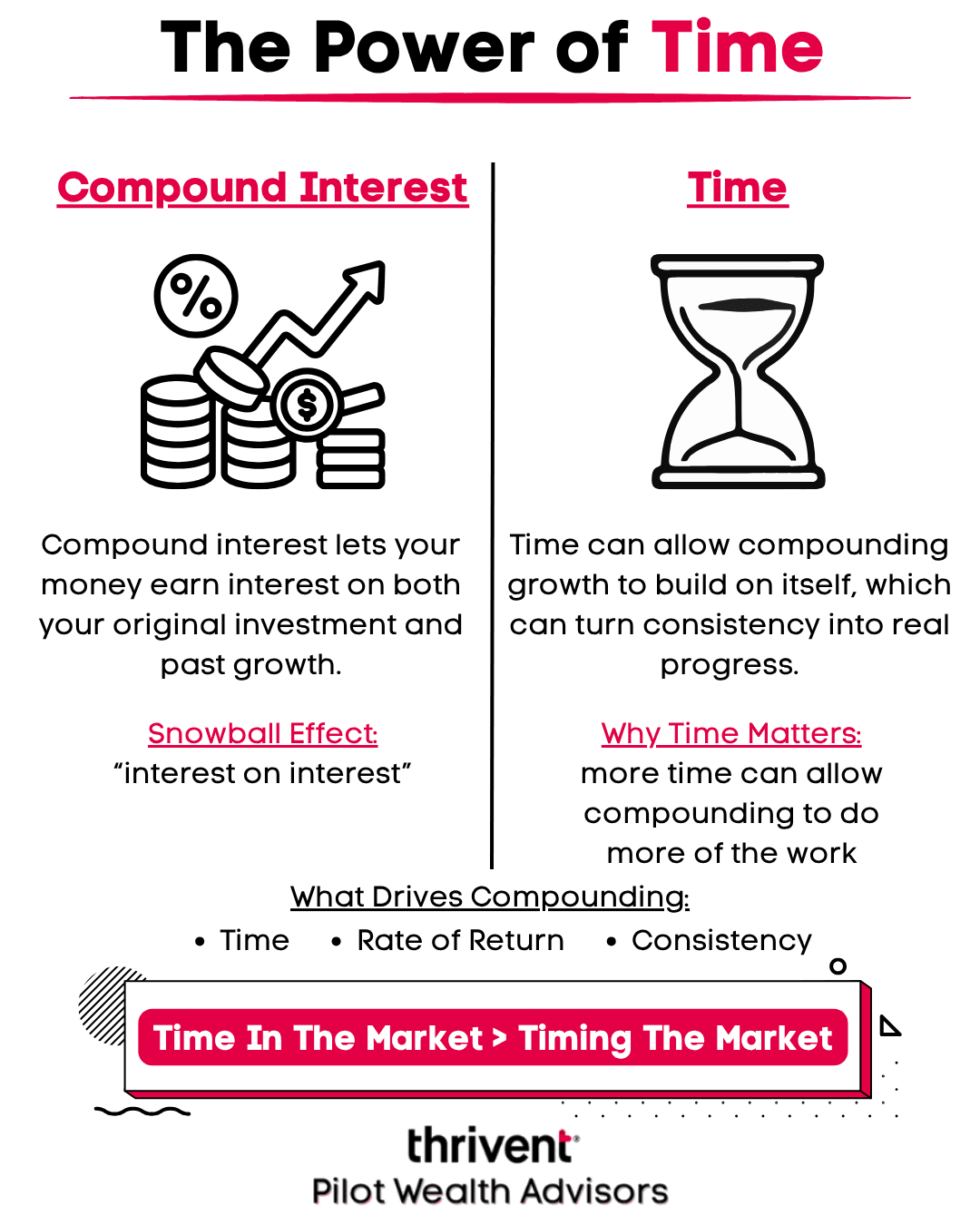
It's not about timing the market, it's about time IN the market. It’s natural to want to react to what the market is doing in the short term. Headlines change daily, markets move up and down, and trying to time the “right” moment to invest can feel appealing. The challenge is that short‑term market movements are unpredictable and difficult to consistently get right. What can be controlled is how long you stay invested and how consistently you participate. Compound interest allows your money to earn growth not only on your original investment, but also on prior growth. When investments are given more time, compounding can build on itself and begin to do more of the work—helping steady contributions grow over time. Rather than focusing on jumping in and out of the market, staying invested through market cycles can help drive better long-term results. Time can allow compounding growth to unfold, even when progress doesn’t happen evenly year to year. Staying patient and consistent can matter just as much as the rate of return itself. That’s why, for many investors, time in the market can matter more than trying to time the market. See thrivent.com/social for disclosures.
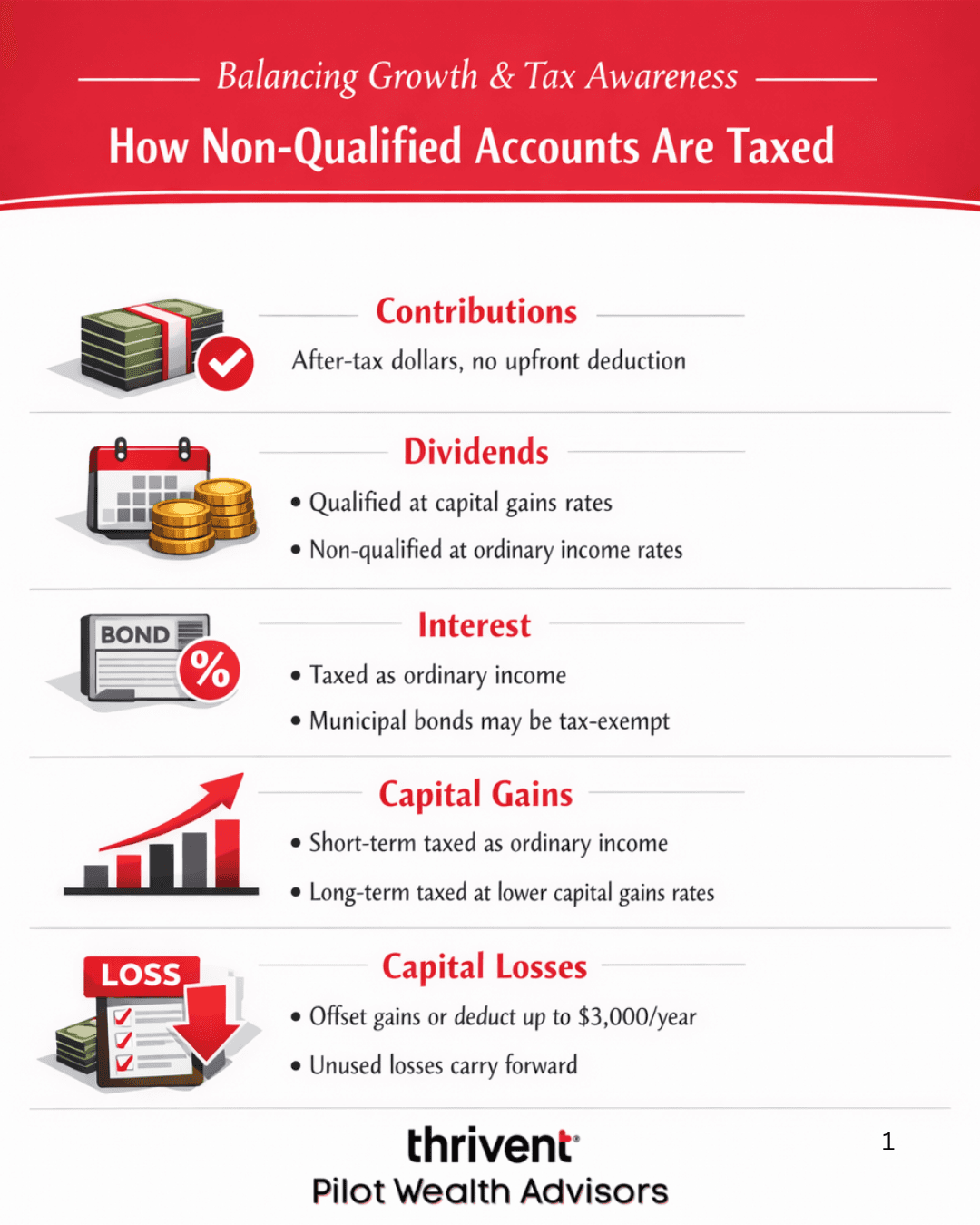
Non‑qualified (taxable) investment accounts can be a valuable planning tool, but understanding how and when taxes apply is key to using them effectively. Contributions are made with after‑tax dollars, meaning there’s no upfront deduction, but these accounts offer flexibility and work well for long‑term growth, income needs, and accessibility. Taxes don’t only come into play when investments are sold. Interest and dividends are typically taxed in the year they’re earned, even if they’re reinvested, which makes annual tax awareness just as important as long‑term performance. Growth inside the account isn’t immediately taxable, though. Unrealized gains reflect increases in value that haven’t been sold yet, while taxes generally apply once gains are realized. How long an investment is held can significantly impact taxation. Short‑term gains are usually taxed at ordinary income rates, while long‑term gains may be taxed at lower capital gains rates depending on income. Dividend taxation can also vary, as some dividends may qualify for preferential tax treatment if specific holding requirements are met. Losses can play an important role as well, since capital losses may be used to offset gains and help reduce taxable income, with excess losses carried forward to future years. Additionally, the mix of investments held matters, as interest‑producing assets, growth‑oriented investments, and tax‑advantaged options like municipal bonds are all taxed differently. The goal isn’t to eliminate taxes, but to understand when and why they occur so investment decisions can balance growth with tax awareness. Used thoughtfully, non‑qualified accounts can be an effective part of a well‑rounded financial strategy.See thrivent.com/social for disclosures

Non‑Qualified (NQ) accounts are investment accounts used outside of traditional retirement plans and can play an important role in a well‑rounded financial strategy.They offer flexibility in how accounts are registered, broad access to investment options, and the ability to align portfolios with specific goals and risk preferences. Because there are no required distribution rules, these accounts allow investors to remain in control of timing and strategy as life circumstances evolve.Non‑qualified accounts are commonly used to supplement retirement savings, create liquidity, and earmark funds for goals such as future purchases, major life events, or long‑term planning beyond retirement accounts.How are non‑qualified accounts taxed?👀 Stay tuned — we’ll cover that in our next post.See thrivent.com/social for disclosures.
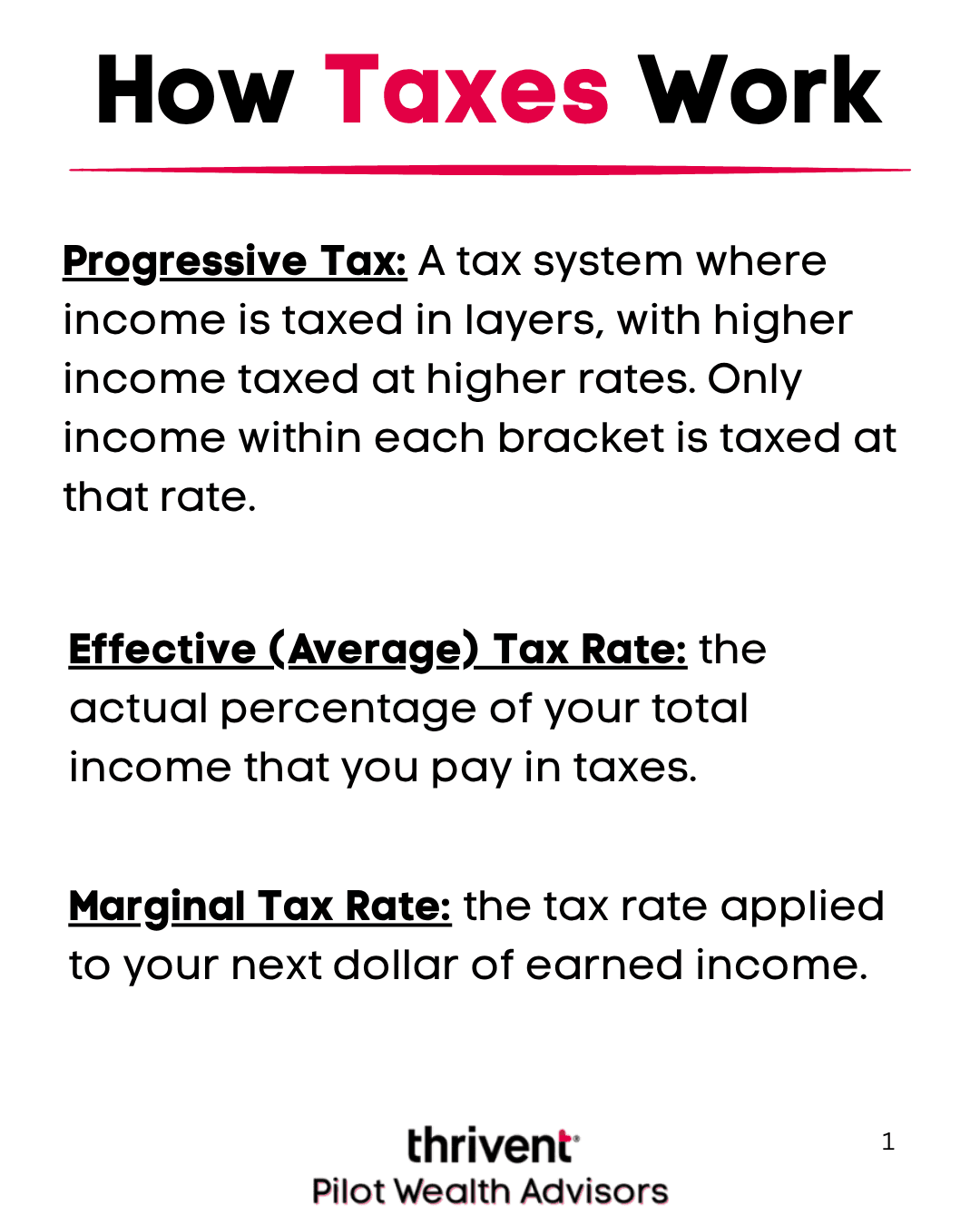
Taxes can seem confusing, so understanding how your money is taxed can make a big difference.The U.S. uses a progressive tax system, meaning income is taxed in layers. Your marginal tax rate applies only to your next dollar earned, while your effective tax rate reflects the percentage of total income you pay in taxes overall.In this example, even though the individual falls into the 24% marginal tax bracket, that doesn’t mean all of their income is taxed at 24%. Only the portion of income that spills over into that bracket is taxed at that rate, which is why the effective tax rate is closer to 19%.Understanding the difference can lead to better tax planning and fewer surprises.See thrivent.com/social for disclosures

Tax Day is just a deadline. The planning decisions you make throughout the year are what can influence how prepared you feel when that deadline arrives. As you look ahead to 2026, tax filing season can be a helpful time to review cash flow, revisit goals, tax considerations, and think intentionally about the rest of the year.See thrivent.com/social for disclosures.
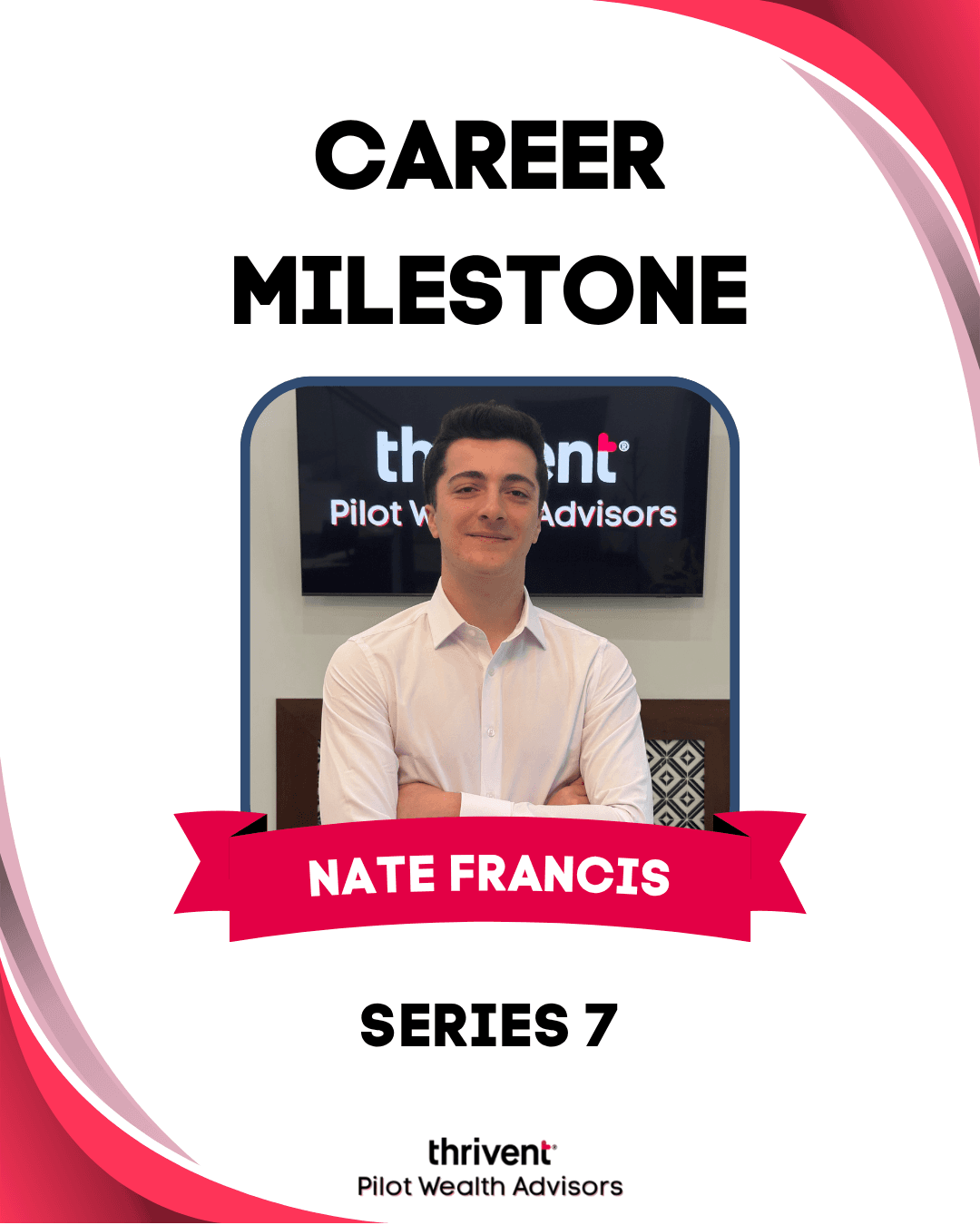
Excited to introduce Nate to our Pilot Wealth Advisors team.Nate has been with us as an intern since June 2025 while finishing his degree at Bowling Green State University, where he is studying Finance and Applied Economics and is set to graduate this May.Over the past year, he has shown a strong work ethic and a real commitment to learning the business. Recently, Nate passed his Series 7 exam, adding to the Life & Health and SIE exams he has already completed. After graduation, Nate plans to join the practice full time as he continues working toward completing his licensing requirements.Nate has been a great addition to the Pilot Wealth Advisors family. His attention to detail, strong work ethic, and willingness to learn help us continue serving our clients at a high level.Outside of the office, Nate enjoys cars, spending time with family, and traveling.We’re proud of the work Nate has put in and are excited to have him as part of the team.#PilotWealthAdvisorsSee Thrivent.com/social for disclosures