Insights
Some recent research has suggested that in certain markets in the US housing values have decliend between 6-12% in the last 3 months.
If you pulled up Zillow right now and saw your home value was down 8% would you sell your house and move to cash as fast as possible?
#Homes
#Realestate
#Sales
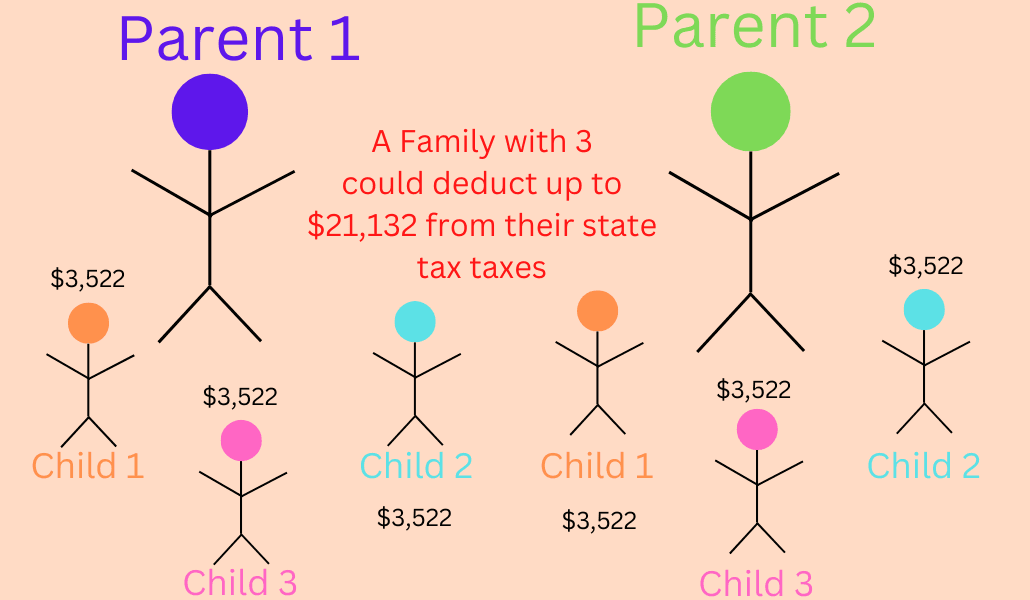
Attention Iowa Private School and Home School Families! This is a 529 update!!
Did you know that in some states private school and home school tuition expenses are eligible to be withdrawn from a 529 account? As an example, in the state of Iowa, a tax deduction is available for Iowa residents. Currently, the deduction is a maximum $3,522 per beneficiary per donor per year.
We often think of the 529 as just a college savings plan. However, there are other potential qualified uses. Currently, funds can be withdrawn for any of the qualified educational expenses listed below.
• College education expenses (including books and other expenses)
• Tuition for private education in the state of Iowa
• Tuition for co-op or homeschool assistance programs
The funds in a 529 plan are earmarked to cover future educational expenses. The use of a 529 plan toward non-college expenses could be a tax efficient strategy for you, depending upon your family’s situation. Hypothetically, a two-parent family with 3 children could deduct up to $21,132 from their income for state tax purposes.
Should you have more questions on how this provision within a 529 plan may apply to you and your family, I'd love to chat with you! Please call 319-232-2171.
As a bonus, remember to ask how a non-qualified account (after tax dollars) can be used and leveraged alongside a 529 plan.
#Planning
#Education
#IowaTaxes
Offered through a brokerage arrangement with Thrivent Investment Management Inc. 529 college savings plans are not guaranteed or insured by the FDIC and may lose value.
Consider the investment objectives, risks, charges, and expenses associated before investing. Read the issuers official statement carefully for additional information before investing.
Investigate possible state tax benefits that may be available based on the state sponsor of the plan, the residency of the account owner, and the account beneficiary. Consult with a tax professional to analyze all tax implications prior to investing.
Thrivent and its financial advisors and professionals do not provide legal, accounting or tax advice. Consult your attorney or tax professional.
The hypothetical example provided is for illustrative purposes and may not be representative of actual results. Tax laws are subject to change.
See thrivent.com/social for additional information
See collegesavingsiowa.com for sources
Here's a list of the top 10 resources I would recommend for trying to predict what the S&P will do in 6 months.
1.
2.
3.
4.
5.
6.
7.
8.
9.
10.
What am I missing?
#Longtermthinking
#Staythecourse
#Speculation
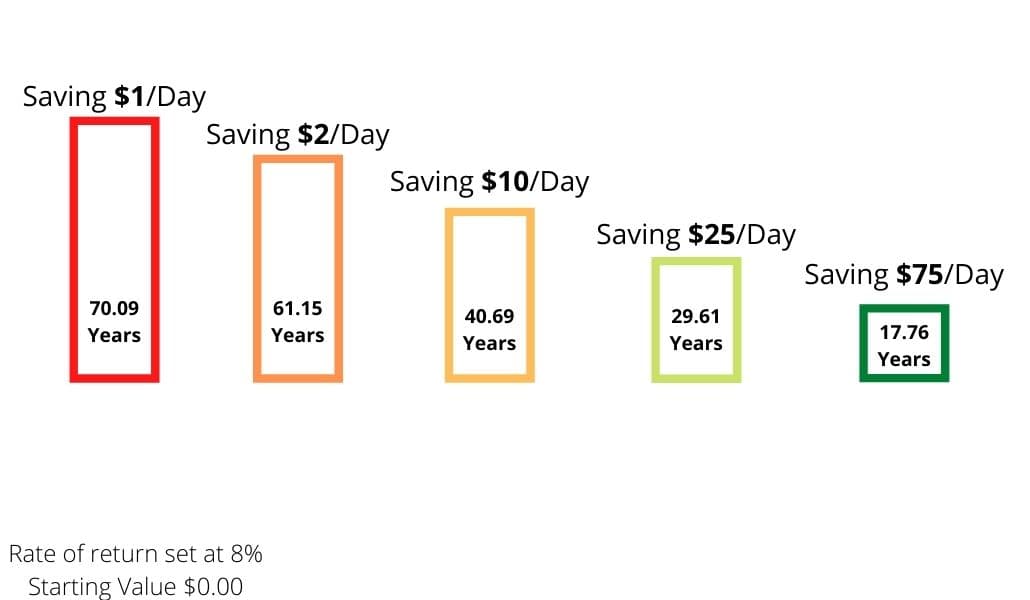
How fast can you become a millionaire?
Well assuming an annualized 8% rate of return it would all just come down to your savings rate.
How fast can you build up the habit of saving $10/day?
Check out the graphic below to see how attainable 1 million really is!
There's nothing like automation to help us put these savings rates into practice.
#YourFutureSelfWillThankYou
#Savings
#SavingsRate
Waiting to have a financial plan until you are on track with your financial planning.
Is like waiting to start training for a marathon until you pass the 12 miles marker.
Disciplined habits get us on track. Waiting to get started keeps us in a state of hoping and guessing.
#Planning
#FinancialPlanning
#Advising
#Money
#Gettingstarted
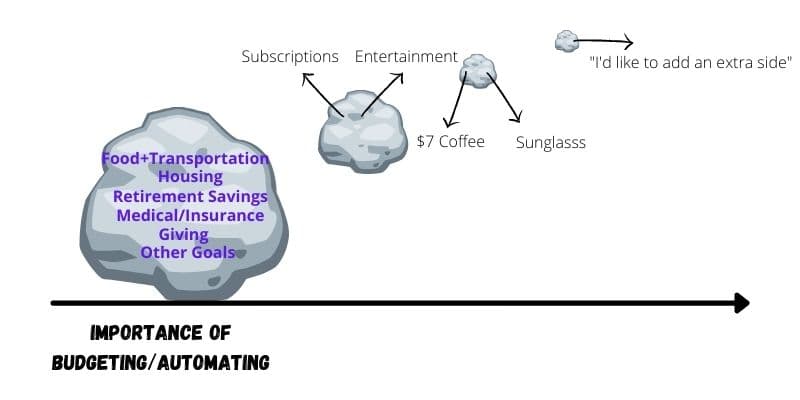
First things first.
Or as I like to say to clients let's take care of the big rocks first.
Often times budgeting is a word that causes instant anxiety and frustration.
What happens? We start loosing ourselves in the pebbles...can I afford that twice baked potato, what about that coffee before my meeting? It's nearly the end of the month have I spent too much on entertainment?
I honestly do not care what clients spend their "spending" money on...because we set it aside to spend it...so why would I care if it gets spent?
I prefer to spend most of the budgeting conversation focusing on big rocks!
Are we on track for our goals? Are we doing the things we know we have to do FIRST!?
Once we feel good about where our big rocks are at, we can feel great spending whatever is left over.
What is the secret sauce to making sure we don't forget to take care of our big rocks?
-Automation
-Automation
-Automation
What "Big Rock" conversation have you been putting off?
#Finances
#Budgetingsucks
#Strategy
#YourFutureSelfWillThankYou
#Money

Are you a busy executive in sales, management or a business owner?
Are you entering open enrollment season again?
Here's what you should be thinking about when it comes to the most tax efficient account I know of.
Do I have a high deductible health insurance plan?
What is the maximum amount I can save into this account?
Do I leave the fund balance in cash or do I invest some of the account?
The answers of these questions depend on your financial plan and your specific situation!
If you want to spend a few hours researching this account and try to set contributions based on your research...go for it!
Or if you'd like a quick 15 minute phone call I can do my best to answer these questions.
#FinancailPlanning #HSA #Sales #Businessowner #OpenEnrollment
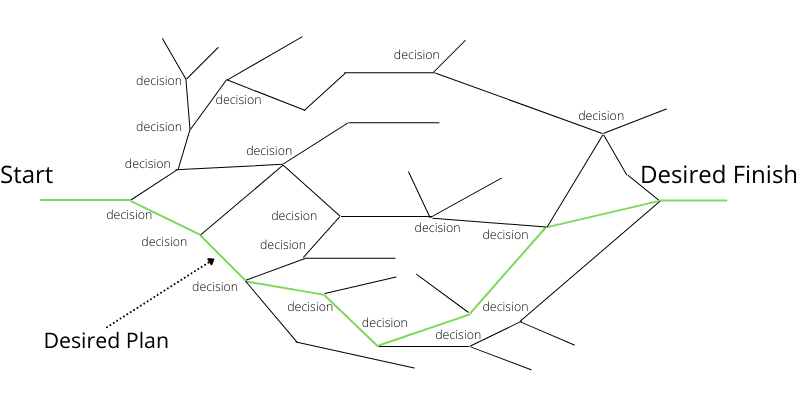
We get it...it's expected...the financial plan you map out today will change
Your life and plan will change as you make decisions and opportunities present themselves.
You could:
-Get a raise
-Inherit assets
-Grow your business faster than expected
You could also:
-Get laid off
-Have a medical emergency
-Be forced to move unexpectedly
So will the plan projections you look at today be a perfect forecast of your future?
Absolutely not.
Are they a great start? YES!
And most importantly projections help us make decisions.
When things change you are going to want to have someone who can help modify your plan to help you chose your next desired path.
There are many ways to get to your desired finish, do you have the team around you to help you chose the path that makes the most sense for you?
#Money #Decisions #FinancialPlanning
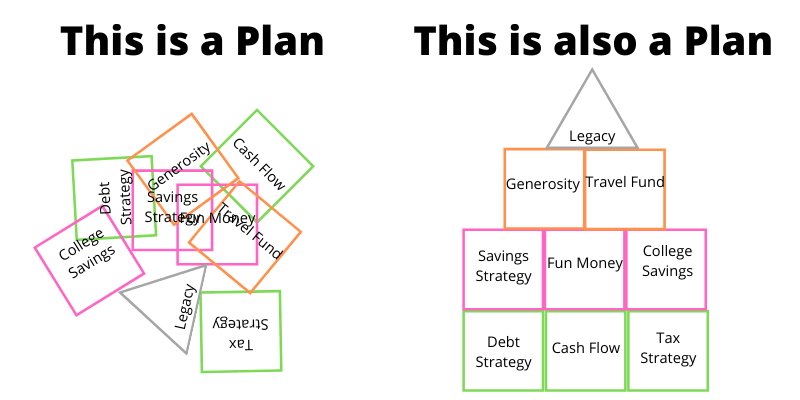
Not being intentional with your finances is a plan.
I would argue that it's just not a very good plan.
Your plan doesn't have to look like your parents plan, neighbors plan or friends plan. You can arrange the blocks in an order that resonates with you.
Experts may say your plan isn't "perfect", who cares?
Having an intentional plan that works for you is better than the chaos of flying by the seat of your pants.
Which kind of plan do you want to have?
#Finacnes #Money #FinancailPlanning

Will it be a whirlwind of analysis, planning and executing when you finally decided to become intentional about financial planning?
Probably!
But there is a calm after the storm.
I snapped this picture after a recent trip to the hardware store to get some sheetrock supplies. It rained so hard that it sounded like we were inside a drum!
But it stopped as soon as I checked out and the calm sky was incredible to see.
There is simplicity on the other side of complexity and it's wonderful to breath once the dust has settled.
Don't wait until "things calm down" be intentional today.
#YourFutureSelfWillThankYou #Finance #Money

Cash is burning up in your bank accounts!
I recently was cutting up some limbs for splitting and burning in my back yard. (Fun fact about Iowa is we have tornados and summer storms so cleaning up trees is just a way of life).
While my neighbors and I chatted and watched a pile of brush go up in flames I started to think about how our money is loosing buying power.
Don't save money while the government prints it.
Cash on the side lines is at risk to a silent killer, inflation.
If you are worried about the minimal rates of return banks are paying reach out to a professional who can help you understand how your money can work for you!
#YourFutureSelfWillThankYou #Strategy #Money
"So...how long is this going to take?"
When I start working with a brand new client (this could be you ;)
I often hear an objection based upon time! And I totally get it. My ideal clients are usually very busy people who want help delegating out certain financial decisions.
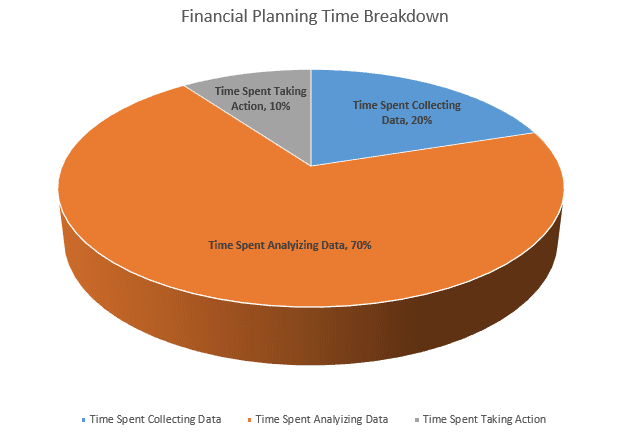
So here is a break down of how much time it will take to get the first year of planning executed.
Data Collection (where the client does the leg work)
Data Analyzation (where the advisor does the leg work)
Implementation (where we do the work together!)
Data collection: Typically 1 Hour (60 minutes) 20% of time to get started
Data Analyzation:
-Typically takes me 2 hours to analyze and run projections on my own before the client meeting (this is an average there has been times this takes over 6 hours)
-Time analyzing data and reviewing projections with client is usually around 1.5 hours
2 + 1.5 = 3 hours (210 minutes) 70% of total planning time.
Implantation: Our team sends out DocuSign's to get the ball rolling on implementation and clients sign the documents. This typically takes around 30 minutes 10% of total planning time.
So my question to you today, can you afford NOT to allocate 180 minutes to get your financial plan started?
#YourFutureSelfWillThankYou #Planning #Money
Waiting to have a financial plan until your situation is complicated.
Is like waiting to learn how to drive a car until you are in the passenger seat and your vehicle is going 80mph.
There is no better time to start learning the basics than now!
#FinancialPlanning #TaxStrategy #Money
What do your clients want?
It's not rocket science your clients want to know how you can help them and how you get compensated to do that.
Make that clear look for opportunities to serve.
As my 10th grade writing teacher told me "K-I-S-S Keep it simple stupid".
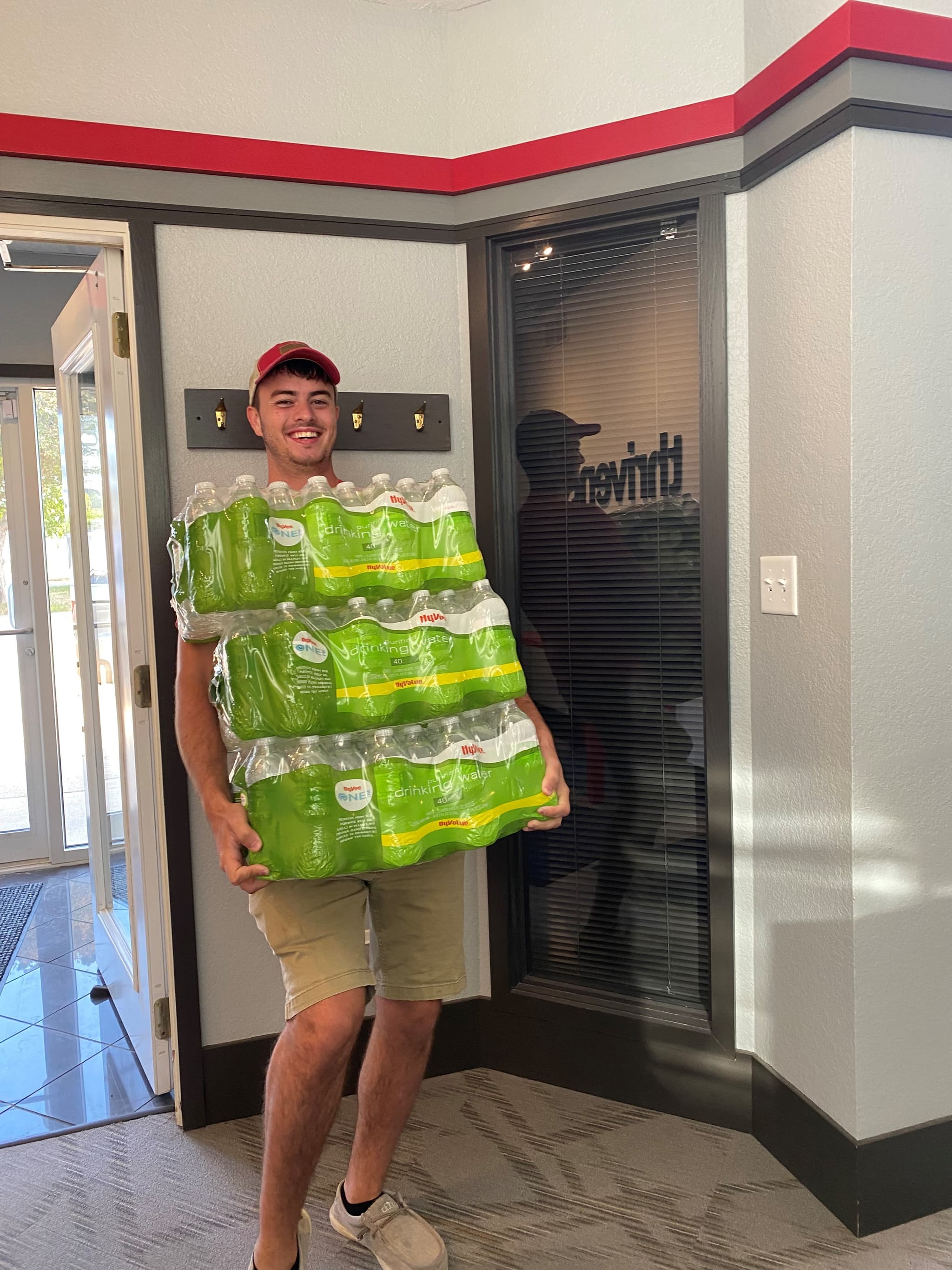
And in the Midwest when its 95 degrees out they also want cold water.
It is a privilege to serve our clients and I am thankful for a team that is committed to finding ways to serve clients in the ways they want to be served.
#Financialplanning #Money #Water
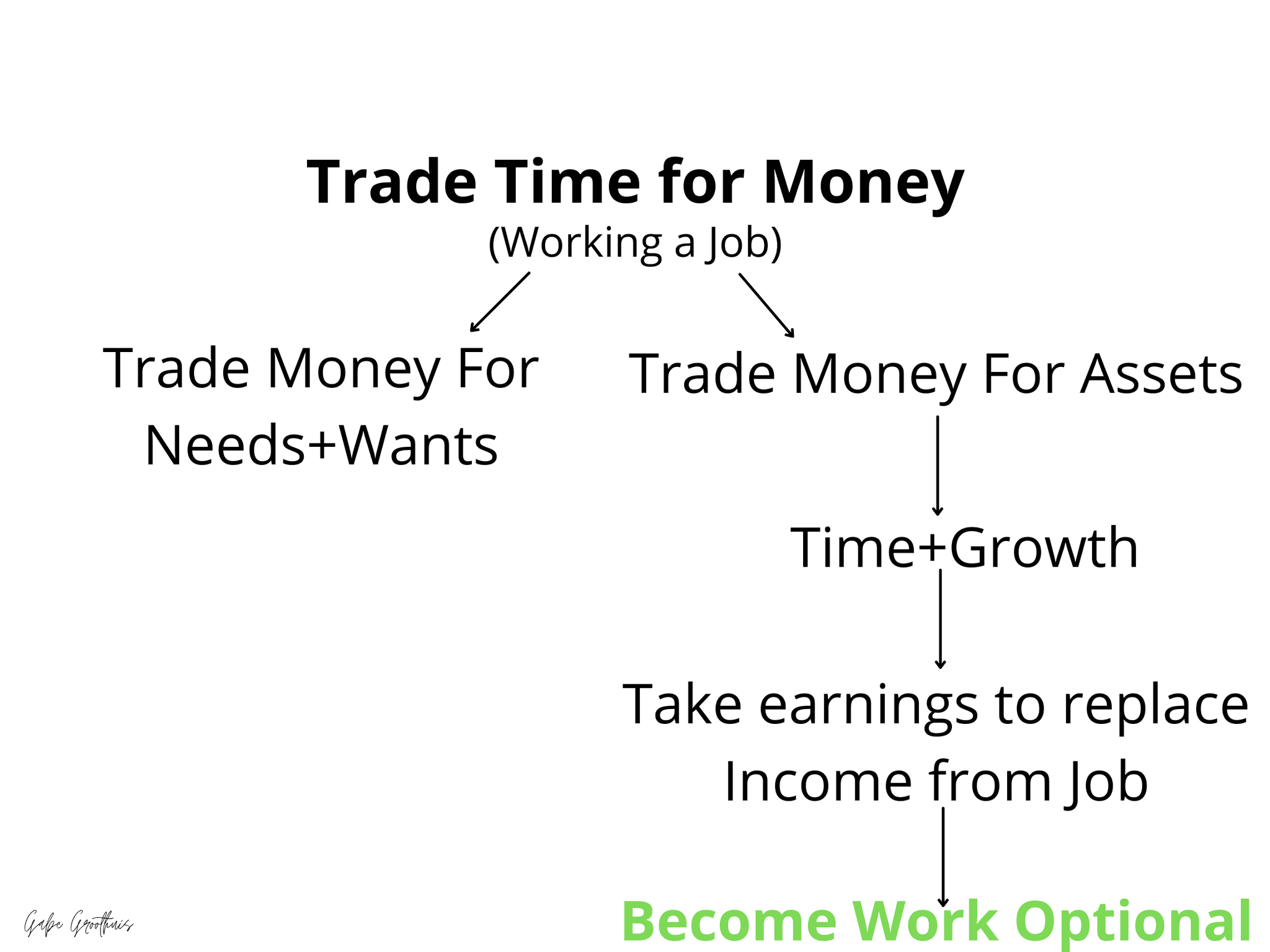
INCOME FLOW CHART
Where does the cash in your checking account come from? Usually, while we are in the accumulation stage of building wealth it comes from trading our time for money.
A portion of our income needs to go towards our living needs and wants.
We also have a choice to set aside a portion of our income into assets. Hopefully, these assets will produce income for you in the future.
At some point if your assets grow over time you may be able to take earnings from your assets to live on.
Eventually, this can lead to you becoming work option.
Work optional=not being forced to trade time for money.
Questions about what assets make sense for you to invest in? Reach out if you have questions!
#YourFutureSelfWillThankYou #FinancialPlanning #CashFlow
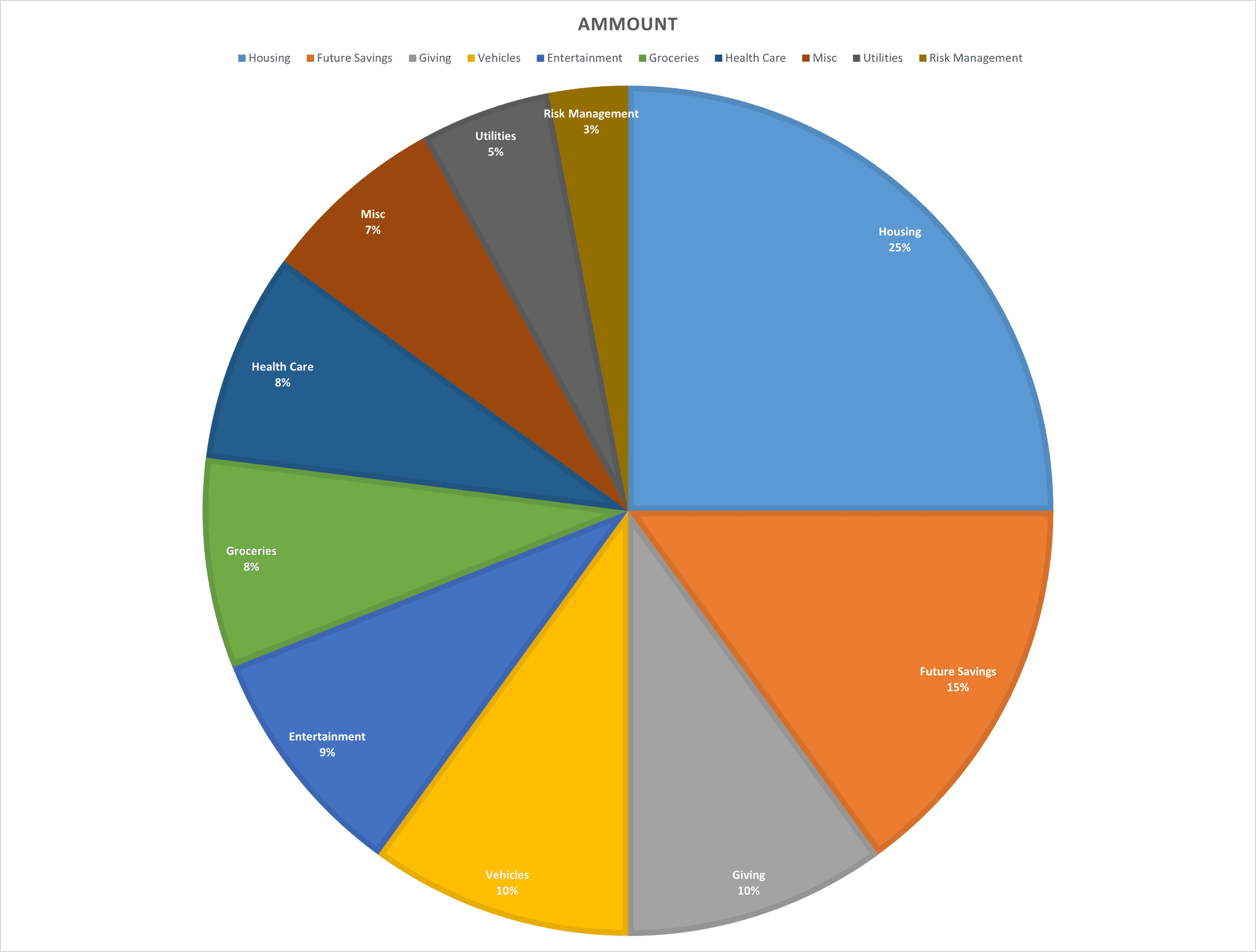
What percent of your salary should go to protecting and replacing your income?
Below is a pie chart I roughed out on excel (for illustrative purposes only not a recommendation).
It is not uncommon for folks to spend large portions of their annual income on housing, food and entertainment.
But what would happen if your "pie" went from a $160,000 down to "30,000"? How would that impact your families abilities to reach their future goals?
What if your income was completely lost, how would that impact you and your families plans for future spending/savings.
Risk management (Life insurance, disability insurance and emergency funds on hand) is not the most exciting topic to discuss.
However, when you think that 2-3% of your income could replace 60% of your future earners or even created an asset to replace your income entirely if you were to pass...well at least I get excited thinking about that!
Risk management spending is a small sliver of the pie but it protects the rest of the pie so it's probably worth it to understand what you have in place an why.
#Riskmanagment #Planning #Finances
"Investing for my future self is scary because I might lose money."
Yes investing in the markets does expose you to loss of principle.
But what does leaving funds in money markets or cash expose you to.
Loss of purchase power.
In 2001 average cost of...
Bread: $0.99
1lb 100% Ground Beef: $2.11
1 Gallon of Gas $1.40
Today average cost:
Bread: $1.51
1lb 100% Ground Beef: $4.57
1 Gallon of Gas $3.15
S&P 500 June 15th 2001: 1215.36
S&P 500 June 1st 2021: 4246.59
Questions about these numbers or what the risk of losing buying power is?
Let's chat!
#YourFutureSelfWillThankYou
Source for S&P data: Morningstar.com
Source for average price: bls.gov
Are you on track to be work option at certain date in time?
The most effective way I have found to answer this question is to run Monte Carlo analysis to see if current habits are matching future expectations.
What's the hardest part about running these simulations? Collecting data.
Once we have the information projecting it is actually pretty painless.
Collecting data can take a day or two.
Reviewing the analysis can take an hour or so.
Value of knowing if you are on track...? You tell me.
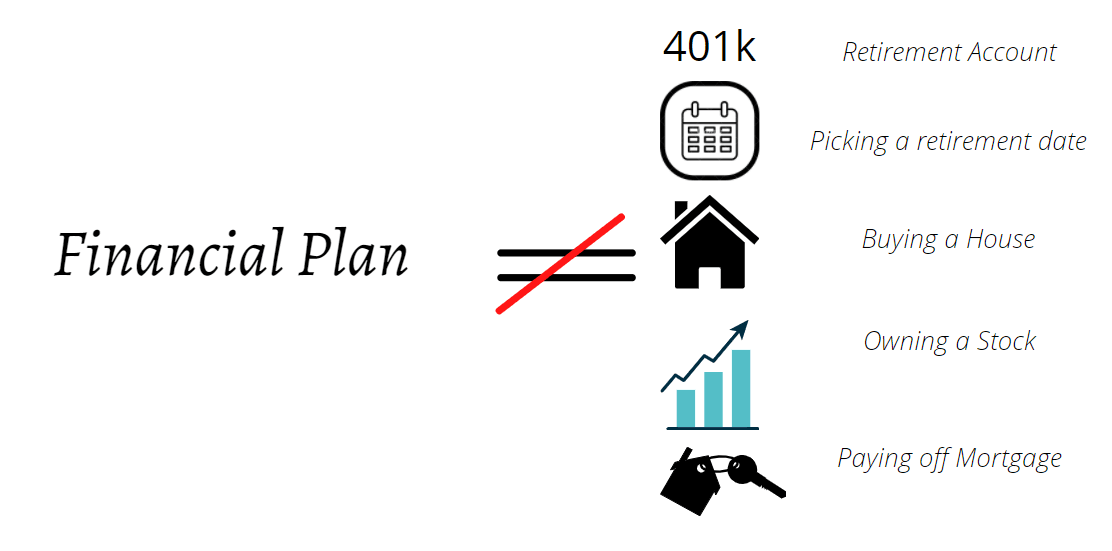
"________ is not a financial plan."
Things that are not a financial plan:
1. A 401k
2. Picking a retirement date
3. Buying a house
4. Owning a stock
5. Paying off a mortgage
Can I have 30 more seconds of your time?
Ponder this question...when was the last time you were with someone who celebrated have a financial plan and having a diversified portfolio that matched that plan?
We all have friends who publicize on social media...
"I just retired!"
"I just bought my first house"
"My XYZ stock is up 600%"
"We completely paid off our mortgage"
While all these factors are part of the planning process, and even reasons to celebrate often times we celebrate decisions that may not actually be helping our plan and we fail to celebrate the planning process itself.
Final thought: It's hard to celebrate your plan if you don't have one.
#YourFutureSelfWillThankYou #Planning #Goals

It has been almost 5 years since I went sky diving.
You learn a lot from jumping out of a perfectly good airplane.
Here are 5 lessons I remember.
1. Experiences can be more rewarding than cash in the bank. My grandpa offered to give me some cash after I graduated high school or take me sky diving, the time spent with him and my aunt was priceless.
2. Trust the experts. My tandem partner had been doing jumps all of his adult life, although every nerve in my body was frozen at 14,000ft he was calm, cool and collected.
3. It's hard to breath when falling at maximum velocity. Sometimes to catch a breath we just need to slow down.
4. Having a back up parachute is wise. Although we didn't need to use plan B I was glad it was there.
5. When in doubt just send it.
Do these lessons apply to finance? Business? Life? Maybe maybe not either way you all need to give sky diving a try.
What other lessons am I forgetting?
Drop a comment!