A financial plan helps you make the most of what you have.
It helps you move forward with confidence regardless of your income or net worth. Let's connect if you're ready to build yours.
See thrivent.com/social for important disclosures.
Week 37 - October - Find One Forgotten Benefit
Looking at a view like this, it is easy to focus on the big mountain in front of you. But sometimes the hidden gems are the waterfalls, trails, and overlooks you almost miss along the way. Your benefits can be the same.
Many people are paying for things they could be getting at a discount or even for free through work, memberships, insurance, or credit card benefits.
Take a few minutes to check:
🏔️ Employee benefits you have not reviewed in years
🏔️ Discounts through professional organizations or memberships
🏔️ Credit card rewards or perks you rarely use
🏔️ Health savings account or wellness programs
🏔️ Insurance discounts for safe driving, bundling, or loyalty
You might discover you have roadside assistance, travel protections, tuition benefits, identity theft monitoring, gym reimbursements, or discounts you completely forgot about.
Unlike climbing a mountain, this financial win does not require much effort. Sometimes the money is already there. You just have to know where to look.
⬇️
Hi, I'm Vanessa. I'm a Marine Veteran and a Thrivent Advisor. I help individuals at every stage of life define and achieve their goals, whether they're just starting their financial journey or preparing for retirement. The more we understand our objectives and align them with our values, the stronger we become as partners, parents, business owners, leaders, and neighbors.
See thrivent.com/social for important disclosure information.
Your finances don’t exist in separate buckets.
Let's create a thoughtful financial plan to help you see how all the pieces work together.
See thrivent.com/social for important disclosures.
Based on the transportation choices happening in this photo, I am pleased to report that gas prices are no concern for at least one member of this household. Skip the car this week and find another way to get where you are going.
Consider:
🏍️ Walking to a nearby errand
🏍️ Biking to the park or a friend's house
🏍️ Carpooling with a coworker or another parent
🏍️ Letting the tiny motorcycle in your driveway handle transportation duties
Okay, maybe not that last one.
Look for one opportunity to save a little money, get a little exercise, and reduce wear and tear on your vehicle. The savings from one trip may not be life changing, but the value comes from doing small things consistently over time.
Plus, if your alternative transportation option makes you feel this cool, that is just a bonus.
⬇️
Hi, I'm Vanessa. I'm a Marine Veteran and a Thrivent Advisor. I help individuals at every stage of life define and achieve their goals, whether they're just starting their financial journey or preparing for retirement. The more we understand our objectives and align them with our values, the stronger we become as partners, parents, business owners, leaders, and neighbors.
See thrivent.com/social for important disclosure information.
What could your future look like with the right plan?
Whether you're planning for what's next or navigating a new chapter, you don't have to figure it out alone.
Let's talk about what matters most to you, then build a personalized financial plan to help you achieve your goals.
See thrivent.com/social for important disclosures.
The benefits of life insurance: What you need to knowThere are 7 key benefits of including life insurance in your overall financial strategy. Want to discuss further? Let's set up time to talk more about your life insurance options.
Looking at this ship got me thinking...
Maybe your financial challenge this week is to trade in your yacht for a slightly smaller yacht. If that is not practical, you could try swapping one product you buy regularly for a less expensive version instead.
This week's habit is simple:
⚓ Swap one name brand item for a store brand
⚓ Try a less expensive grocery item you buy every week
⚓ Compare subscriptions and downgrade one plan
⚓ Look for a generic version of a product you already use
Most financial progress does not come from dramatic changes. It usually comes from small course corrections made consistently over time.
And who knows? Saving a few dollars on your coffee creamer, peanut butter, or streaming service today might help fund a future adventure!
Probably not a yacht. But maybe a boat ride. 😉
⬇️
Hi, I'm Vanessa. I'm a Marine Veteran and a Thrivent Advisor. I help individuals at every stage of life define and achieve their goals, whether they're just starting their financial journey or preparing for retirement. The more we understand our objectives and align them with our values, the stronger we become as partners, parents, business owners, leaders, and neighbors.
See thrivent.com/social for important disclosure information.
The 3 advantages of life insurance for childrenDid you know that purchasing life insurance for children while they are young is more beneficial than waiting until they are older? Here are 3 reasons to insure them now. ⬇️
Updating your life insurance: 7 life events that may affect your coverageIf you’re in one of these 7 life stages, it may be time to update your life insurance coverage. ⬇️
Future you is giving you a high five.
Getting life insurance in your 20s may help you lock in lower premiums and build financial protection early for your loved ones.
Let's make life insurance make sense for your finances now and in the future.
See thrivent.com/social for important disclosures.
A new baby can change your everything (including your finances).
Let’s review your life insurance coverage to help make sure your growing family is protected.
See thrivent.com/social for important disclosures.
When should you get life insurance?Not sure when you should get life insurance? Here are different factors to consider that will help you decide when to take the next step. ⬇️
Do you need life insurance? Questions to ask yourself & your familyWondering how life insurance can benefit your loved ones when you’re gone? Here's a conversation guide to help you in planning for the unexpected. 👇
Together, we can make sure your family is covered for the future.
Can you check off any of these boxes?
✅ Loved ones depend on you for income
✅ Don’t want to pass large debts onto others
✅ Want to leave a legacy
If you checked any of the boxes, you should consider how life insurance can help you protect what’s most important to you: https://bit.ly/47eNLJh
Some of the most important conversations are also the hardest to start.
Talking about what would happen to your loved ones' finances if the unthinkable happened isn't easy. But making space for the conversation today can bring clarity and reassurance for the future.
This resource offers thoughtful questions to start the conversation about life insurance with your family: https://bit.ly/4wHcwH8
Did you know life insurance can do more than just provide a death benefit? It also can help you build wealth during your lifetime and help your family build generational wealth after you pass away. Learn more here: https://bit.ly/3zAzMyO
A few other truths about life insurance:
- It can be more affordable than a lot of people think.
- Your work policy probably isn’t enough on its own.
- Some types offer other benefits and tax advantages.
See thrivent.com/social for important disclosures.
Week 33 - September - Do a pantry cleanout meal to save money and reduce waste
Looking at this meal, there is a good chance it did not start with a detailed recipe or a special trip to the grocery store. It came together from ingredients that were already on hand. Before adding more to your cart, take a look at what is already in your pantry, refrigerator, and freezer. Challenge yourself to create a meal using foods you already have.
Start with a quick inventory:
🍅 Check for produce that needs to be used soon
🍅 Look for canned goods, pasta, rice, or other pantry staples
🍅 Use proteins that have been sitting in the freezer
🍅 Get creative with leftovers and ingredients you might normally overlook
A pantry cleanout meal can help reduce food waste, stretch your grocery budget, and remind you of all the food you already have available.
As we head into the busy fall season with school schedules, sports, and activities filling up the calendar, this can be an easy way to save both time and money.
Sometimes the best meal is not the one you planned. It is the one you create with what is already in front of you.
⬇️
Hi, I'm Vanessa. I'm a Marine Veteran and a Thrivent Advisor. I help individuals at every stage of life define and achieve their goals, whether they're just starting their financial journey or preparing for retirement. The more we understand our objectives and align them with our values, the stronger we become as partners, parents, business owners, leaders, and neighbors.
See thrivent.com/social for important disclosure information.
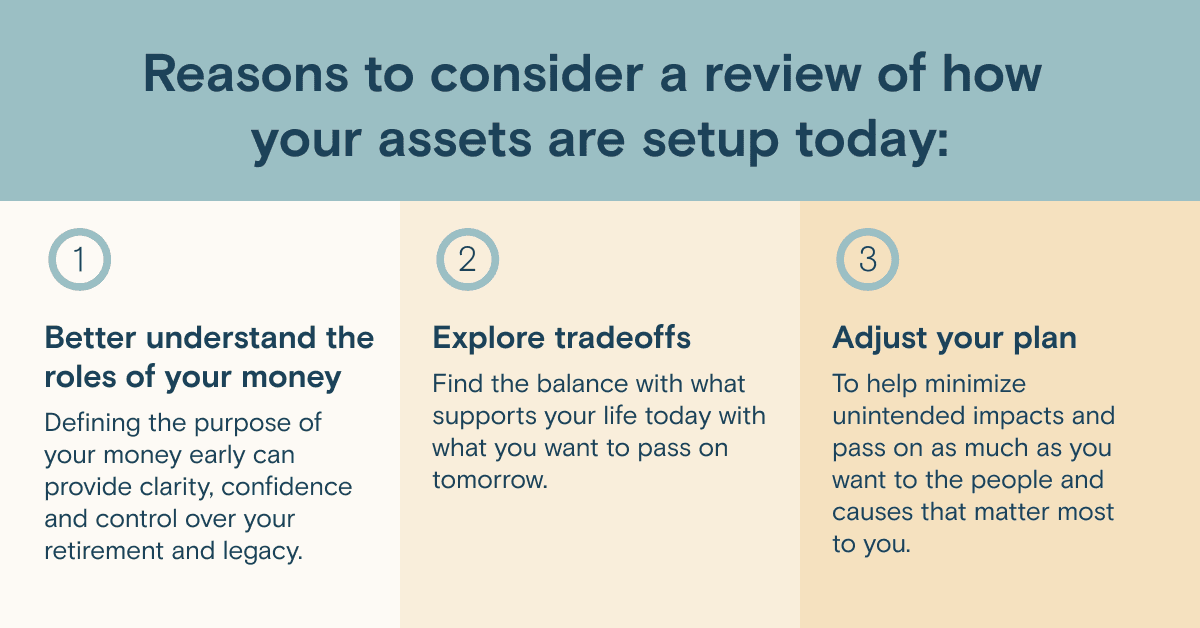
Have you thought about which assets are meant for living today and which ones you hope to pass on? Let’s connect to explore what each piece is supporting today and how it could show up for the people and causes you care about.
See thrivent.com/social for important disclosures.
Wealth transferYou’ve worked hard to build a life you love—now it’s time to decide what your money is meant to do. How it’s set up today is already shaping what reaches the people and causes closest to your heart tomorrow. Take a closer look at your money, so it can support your life now and benefit those you care about.