Insights

pilotbriefing-newsletter.pdfProud to share the very first edition of Pilot Briefing!
We've been working on this quarterly newsletter to give clients and friends a closer look at what's happening at Pilot Wealth Advisors, from planning insights and market perspectives to community involvement, team updates, and upcoming events.
Looking forward to sharing more in future editions. Thanks to everyone who continues to support us along the way!
See Thrivent.com/social for disclosures.

Had the opportunity to be a part of my first Thrivent workshop last night and really enjoyed the experience.
We walked through the 5 Phases of an IRA and had some great conversations with our clients around how tax planning fits into the bigger picture over time. One thing that stood out is how impactful it can be when you shift from thinking year-to-year and instead look at how and when income shows up across your lifetime.
Grateful to be part of a team that gets to have these kinds of conversations and appreciate all of our clients who were able to join us.
See thrivent.com/social for disclosures.
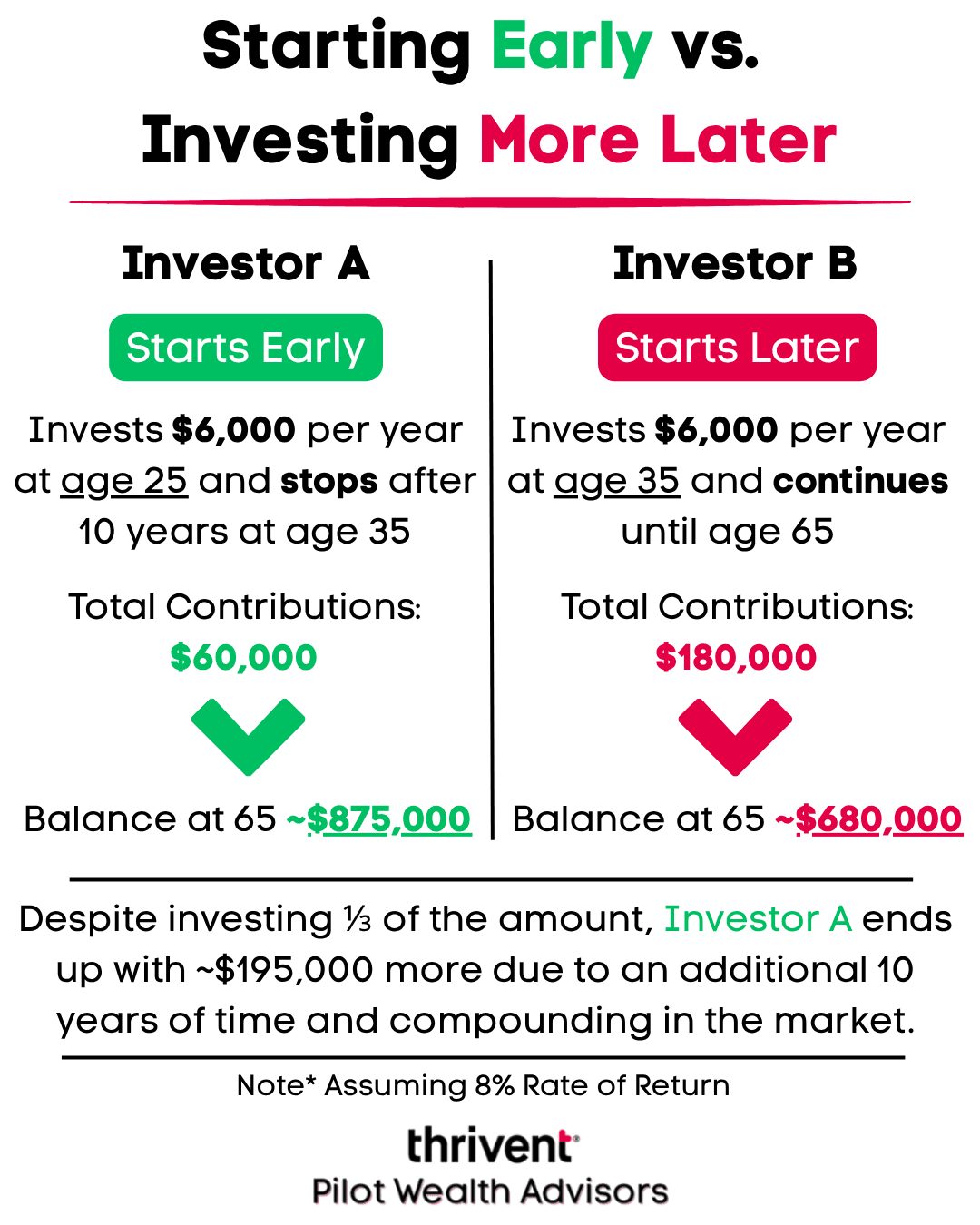
It’s natural to want to invest more later once you feel you have more financial freedom—but this example shows how time can make a meaningful difference in the end result.
Investor A stopped contributing after 10 years, yet still ended with more than Investor B, who invested three times as much over a longer period. The difference comes down to one key factor: time in the market.
When investments have more time, compounding can build on itself and begin to do more of the work—even if contributions stop earlier. Starting earlier can also reduce how much you may need to contribute over time, as growth has more opportunity to build on itself rather than relying solely on higher future contributions.
That’s why it can be important to start early and stay consistent rather than trying to make up for lost time later.
Time in the market can matter more than timing the market.
See thrivent.com/social for disclosures
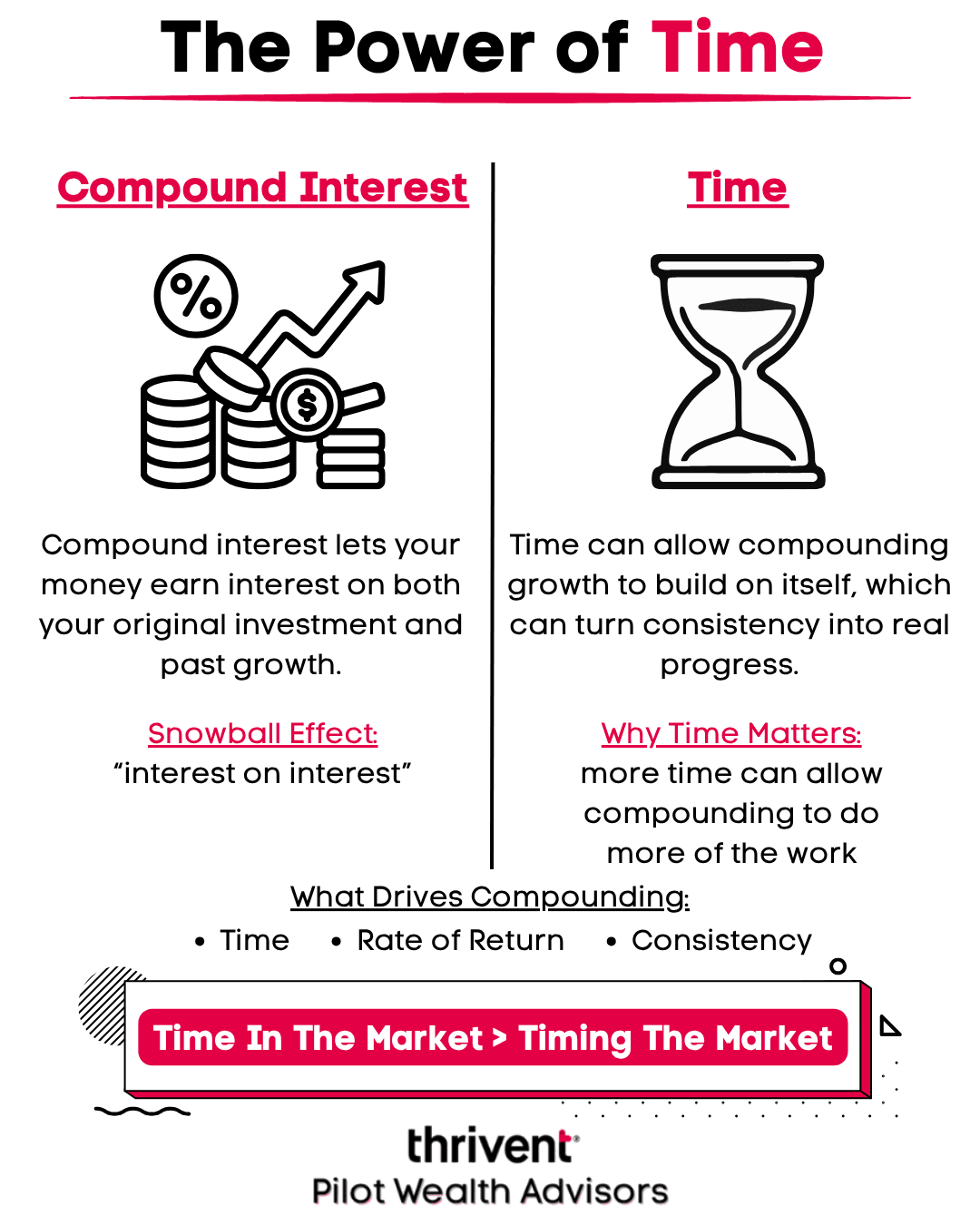
It's not about timing the market, it's about time IN the market.
It’s natural to want to react to what the market is doing in the short term. Headlines change daily, markets move up and down, and trying to time the “right” moment to invest can feel appealing. The challenge is that short‑term market movements are unpredictable and difficult to consistently get right.
What can be controlled is how long you stay invested and how consistently you participate. Compound interest allows your money to earn growth not only on your original investment, but also on prior growth. When investments are given more time, compounding can build on itself and begin to do more of the work—helping steady contributions grow over time.
Rather than focusing on jumping in and out of the market, staying invested through market cycles can help drive better long-term results. Time can allow compounding growth to unfold, even when progress doesn’t happen evenly year to year. Staying patient and consistent can matter just as much as the rate of return itself.
That’s why, for many investors, time in the market can matter more than trying to time the market.
See thrivent.com/social for disclosures.