
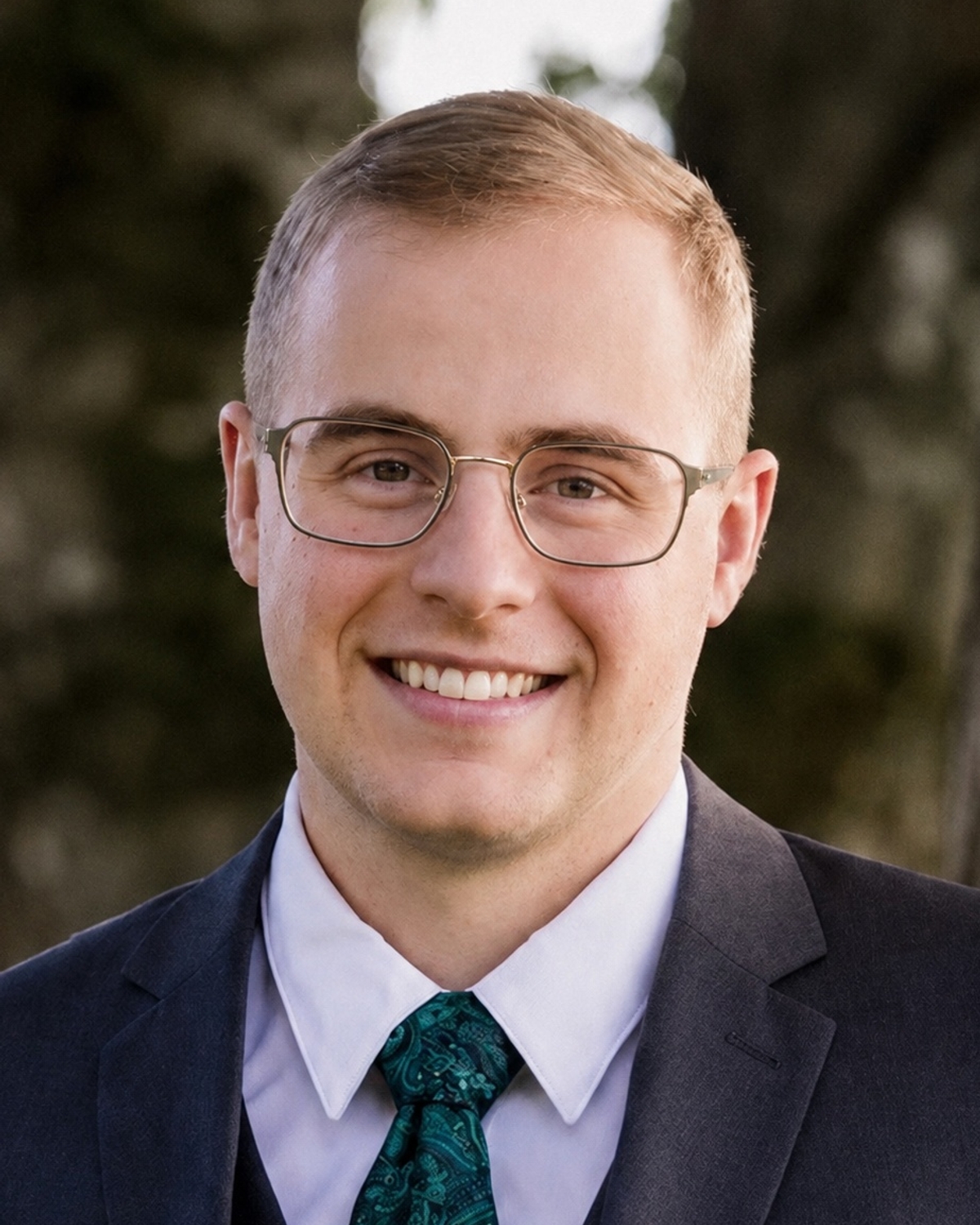
Financial Advisor
.Tax Efficient Planning
Retirement Planning
If that's your hope, I can help you retire fearlessly.
Most people reach out when they start asking questions like:
- Can I retire with $500,000? What about $1,000,000?
- What if the market drops right before I retire?
- How do I turn my savings into retirement income?
- Is my money in the right place for retirement?
- When do I take Social Security?
If any of that sounds familiar, you're in the right place.
I can help you make the big retirement decisions in the right order, then take the day-to-day investing off your plate so you don't have to.
Ready to get started? I'm currently taking on new clients.
I work with people in the Longview and Kelso area who are within 5 to 10 years of retirement. Often, they value in-person appointments, but others prefer meeting virtually.
Most of my clients want a simple answer to one big question: "Will I be okay?" They want to spend time with family, keep giving to their church, maybe volunteer or work a job they actually enjoy. They don't want to worry about managing investments or figuring out how to make their savings last. That's where I come in.
Before you become a client, I want you to know exactly what the process looks like. No surprises.
Meeting 1: Connect
This is our first real sit-down, about an hour. We get to know each other, talk about where you are today, what you’re trying to accomplish, and what’s been on your mind about retirement. I’ll ask a lot of questions and mostly listen. If it looks like we may be a fit, I’ll ask you to send over statements and any other key information I need so I can review everything and provide analysis in the next meeting.
Meeting 2: Discover
I come back with an initial analysis of your situation. We go over the numbers together, make sure everything was entered correctly, and talk through any gaps or follow-up questions before I put together recommendations.
Meeting 3: Deliver
I present you with initial recommendations. We walk through them together so everything makes sense. Then I ask you to go home and sleep on it. There is no pressure to decide in the room. If it feels right, we move forward. If you have more questions, we talk through them.
If you are ready to sit down and talk through your situation, you can Schedule a Connect Meeting here.
If you are not quite sure yet and would rather start with a quick conversation, you can Schedule a 15-Minute Intro Call instead.
One of the biggest concerns people have as retirement gets closer is: what happens if the market drops right before I retire? Or right after?
It's a real risk. If you're pulling money out of your portfolio during a downturn, those losses can do more damage than the same drop would have done 10 years earlier. You're locking in losses at the worst time, and your savings may not fully recover.
That's exactly why we don't wait until retirement to start positioning your investments. We begin shifting your portfolio well before your last day of work so that when the market does what it does, you're not scrambling.
Here's what that looks like:
- We build a portion of your portfolio around stability so you have money to live on without selling investments when they're down
- We keep a long-term growth piece in place so your savings can continue to grow over a 20 to 30 year retirement
- We follow a steady, disciplined approach instead of reacting to headlines or chasing trends
The goal is simple: when the market drops, you already have a plan for it. You don't need to panic, delay retirement, or make a rushed decision.
When things get more complex, I bring in additional experience from my team so you can feel confident in the strategy.
If this sounds like the kind of help you're looking for, Schedue a 15-Minute Intro Call or email me at cade.spenker@thrivent.com.
I believe in being upfront about fees.
In the financial advisory industry, ongoing account fees typically range from 0% to 3% annually depending on the firm, the advisor, and the level of service provided. Here's where my practice falls:
Annual advisory fee schedule:
- Up to $250,000: 1.50%
- $250,000 to $500,000: 1.35%
- $500,000 to $1,000,000: 1.25%
- $1,000,000 to $3,000,000: 1.00%
- $3,000,000 to $5,000,000: 0.85%
- Above $5,000,000: 0.75%
These fees cover ongoing portfolio management, regular reviews, and continued guidance as your situation evolves. Fees are billed quarterly and deducted directly from the account.
My goal is to bring you value above and beyond managing your investments. That means being a steady resource for the bigger picture, your retirement income plan, tax strategies, and the financial decisions life throws your way.
If your retirement savings are still tied up with your employer, like in a current 401(k) or workplace plan, we can still work together.
Through a dedicated planning agreement, I can help you build a clear retirement plan, make smart decisions along the way, and be ready to move when the time comes. It's an annual relationship focused on planning and guidance, not tied to managing your accounts or selling products.
When you're ready to make a move with your savings, we can transition into ongoing investment management from there.

I was born and raised in Longview, Washington, and I still call this community home.
What I enjoy most about this work is building long-term relationships. I'm not here for a one-time meeting. I want to walk with you through retirement, meet regularly, and help you make good decisions as things change.
Financial decisions can feel heavy. When someone leaves a meeting feeling more confident and more at ease about what comes next, that's what matters to me.
That's the kind of advisor I want to be.
I chose Thrivent because the values fit what matters to me, and I wanted to build a practice serving people with care and purpose.
Life Outside of Work
My wife and I enjoy hiking in the Pacific Northwest, playing tennis, traveling, and being involved in our local community.
Family, relationships, and being present in the season we're in are important to us.
I'm currently taking on new clients and would love to connect.
If you're about 5 to 10 years from retirement and want to feel more confident about what comes next, let's talk.
I work with people in the Longview and Kelso area who want a clear plan and don't want to manage the day-to-day investing on their own.
Here's how to get started:
- Ready to sit down and talk through your situation? Schedule a Connect Meeting
- Not quite sure yet? Schedule a 15-Minute Intro Call
- Prefer to reach out directly? Email me at cade.spenker@thrivent.com
- Or call my office anytime
- Bachelors of Finance, Franklin University
- Fraternal Insurance Counselor
- Series 7 - General Securities Representative
- Securities Industry Essentials
- Arizona
- California(Insurance Lic. #4430167)
- Idaho
- Oregon
- Washington
Insights
"How much can I safely take out of my retirement account every year?"
That's one of the most common questions I hear from people approaching retirement.
For many people, the biggest concern isn't growing their money anymore. It's making sure they don't run out of it.
The reality is that there isn't one right answer. There are several approaches people use to create retirement income, and each comes with tradeoffs.
One approach is often called the 4% rule. As a rough guideline, someone with a $500,000 portfolio might start by withdrawing about $20,000 per year and adjust that amount over time for inflation. The goal is to create a consistent paycheck while leaving the rest of the portfolio invested.
Another approach is a flexible spending strategy. Instead of withdrawing the same dollar amount every year, withdrawals adjust based on the value of the portfolio. When markets are up, income can increase. When markets are down, spending may need to be reduced. This approach can work well for people who have flexibility in their budget.
A third option is to use a portion of your savings to create a guaranteed income stream through an annuity. Some people like the idea of receiving a predictable monthly payment that isn't directly tied to market performance. Others prefer to keep more of their assets invested and maintain greater flexibility.
None of these approaches are inherently right or wrong. The best fit often depends on factors like your spending needs, risk tolerance, other sources of income, and how much certainty you want in retirement.
The important thing is understanding that retirement income isn't limited to a single strategy. Most retirees have more than one option available to them, and the right plan is often a combination of approaches that work together.
See thrivent.com/social for important disclosures.
What if you're just working the wrong job?
I'd encourage you to spend some time thinking about what you're retiring to, not just what you're retiring from.
Some of the people I work with are burned out. They're in their 50s, have worked the same job for 30 years, and they're tired. They've done their share of overtime, shift work, and mandatory training days. Their mindset becomes, "Once my portfolio reaches X, I'm done. I'm not working a day longer."
If that sounds like you, here's something to consider: maybe the goal isn't to stop working altogether. Maybe the goal is to stop doing work you no longer enjoy.
I've been surprised by how many people retire from a long career only to find a part-time job six months later. What I've realized is that some of them could have "retired" years sooner if they had simply transitioned to part-time work in a field they actually enjoyed.
Here's a simple way to think about it:
It's not a perfect comparison, but using the 4% rule as a rough guideline, $10,000 of annual part-time income can have a similar impact on your retirement income plan as roughly $250,000 in savings.
What if you planned for the first few years of retirement assuming you'd work a little? Maybe you work part of the year and take the rest off. Maybe you find a job that's lower stress, more flexible, and something you genuinely enjoy doing.
This idea won't be right for everyone. But before you focus only on the number you need to retire, it may be worth asking what you want retirement to look like in the first place.
Because sometimes it's not that you're ready to stop working. You may just be ready to stop doing the work you're doing now.
See thrivent.com/social for important disclosures.
A lot of people I talk to have most of their money in something tied to the S&P 500. It has done well, so it feels safe. But "feels safe" and "is safe" are not the same thing, especially in retirement.
Here is something I ran the numbers on recently. I built a spreadsheet that tested the classic 4% withdrawal rule using real historical returns.
The hypothetical results were eye-opening:
- A portfolio that was 100% in the S&P 500 starting in 2000 ran out of money around 2020
- A portfolio that was 60% stocks and 40% bonds still had money left in 2025
Same starting amount. Same withdrawal rate. Very different outcomes.
The reason is not that the S&P 500 is bad. The reason is that the order of returns matters when you are pulling money out. If the market drops in the early years of retirement, you are selling shares at a low price. That damage is hard to undo.
A few takeaways:
- Diversification is not about chasing higher returns
- It is about giving your plan more ways to survive a bad few years
- The right mix depends on your age, your income needs, and your other assets
- "All stocks all the time" can work while you are saving. It often does not work the same once you start spending.
Past performance is not a guarantee of future results, and the numbers above are a hypothetical illustration only. But the lesson holds: in retirement, how you are invested matters as much as how much you have saved.
See thrivent.com/social for important disclosures.
Office location
Longview Location
1402 Broadway St STE 202
Longview, WA 98632
Phone360-747-2669HoursLongview, WA 98632
M – F: 10 a.m. – 5 p.m.
Licensing is available through your State Insurance Department’s website, which can be located through the National Association of Insurance Commissioners website.
Thrivent and its financial advisors and professionals do not provide legal, accounting or tax advice. Consult your attorney or tax professional.
Thrivent financial advisors and professionals have general knowledge of the Social Security tenets. For complete details on your situation, contact the Social Security Administration.
Thrivent provides advice and guidance through its Financial Planning Framework that generally includes a review and analysis of a client’s financial situation. A client may choose to further their planning engagement with Thrivent through its Dedicated Planning Services (an investment advisory service) that results in written recommendations for a fee.
Designations
For additional information on professional designations and the requirements to earn them, visit https://www.thrivent.com/designations
Thrivent and its financial advisors and professionals do not provide legal, accounting or tax advice. Consult your attorney or tax professional.
Thrivent financial advisors and professionals have general knowledge of the Social Security tenets. For complete details on your situation, contact the Social Security Administration.
Thrivent provides advice and guidance through its Financial Planning Framework that generally includes a review and analysis of a client’s financial situation. A client may choose to further their planning engagement with Thrivent through its Dedicated Planning Services (an investment advisory service) that results in written recommendations for a fee.
Designations
For additional information on professional designations and the requirements to earn them, visit https://www.thrivent.com/designations